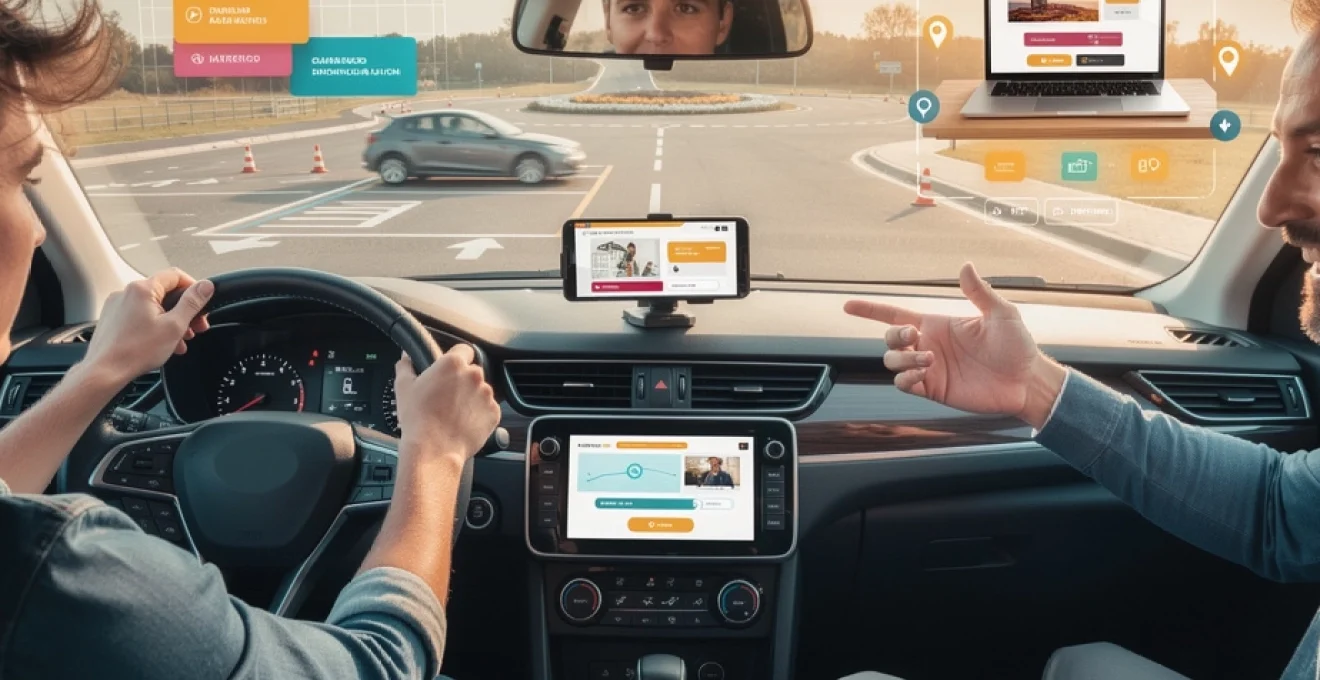
The driving instruction industry has evolved dramatically over the past decade, transforming from a straightforward skill-transfer service into a sophisticated, customer-centric experience that requires strategic planning, innovative marketing, and exceptional delivery. For driving instructors looking to stand out in an increasingly competitive marketplace, simply offering competent lessons is no longer sufficient. Today’s learners expect engaging, personalized experiences that build confidence whilst delivering tangible results. The question isn’t whether you can teach someone to drive—it’s whether you can create an offering so compelling that students actively choose you over dozens of competitors, commit to comprehensive packages, and enthusiastically recommend your services to others. This requires a fundamental shift in how you conceptualize, structure, and promote your driving courses.
The modern driving instructor must think like both an educator and an entrepreneur, balancing pedagogical excellence with business acumen. Whether you’re an established ADI looking to revitalize your offering or a newly qualified instructor building your practice from scratch, the strategies outlined here will help you develop courses that generate excitement, drive conversions, and establish you as the preferred choice in your local market. The driving instruction sector is projected to reach £1.2 billion in the UK alone by 2026, yet only 15-20% of instructors operate at full capacity with waiting lists. What separates thriving instructors from those perpetually struggling to fill their diaries? The answer lies in strategic course design, positioning, and delivery that creates genuine value whilst addressing the emotional and practical needs of your target audience.
Curriculum design strategies for High-Conversion driving course offerings
The foundation of any successful driving course offering begins with curriculum design that balances regulatory requirements with student engagement. Your syllabus isn’t merely a checklist of competencies—it’s a roadmap that guides learners from nervous beginners to confident, test-ready drivers. Effective curriculum design demonstrates your expertise whilst building trust, showing prospective students that you have a structured, proven approach rather than a haphazard lesson-by-lesson methodology. This structured approach becomes a powerful marketing asset, differentiating you from instructors who simply “wing it” based on each session’s circumstances.
Modular lesson planning using DVSA approved syllabus framework
The DVSA syllabus provides the regulatory foundation, but how you modularize and sequence this content determines your effectiveness. Breaking the curriculum into clear, progressive modules—such as Foundation Controls, Traffic Navigation, Independent Driving, and Test Readiness—allows students to visualize their journey and celebrate incremental achievements. Each module should have defined entry criteria, learning objectives, and completion standards. This modular approach facilitates multiple entry points for students with varying experience levels, from absolute beginners to those transferring from other instructors or returning after extended breaks. Consider developing visual curriculum maps that students can reference, showing exactly where they are in their learning journey and what skills remain to be mastered.
Research indicates that students who understand the structure of their learning process demonstrate 23% higher completion rates and book an average of 3.7 additional lessons compared to those following less structured approaches. Your modular framework should align with natural skill progression, ensuring each module builds logically upon previous learning. For instance, roundabout navigation naturally follows junction work, whilst motorway preparation builds upon dual carriageway experience. This logical sequencing prevents cognitive overload whilst maintaining engagement through achievable challenges. Additionally, modular design allows you to create distinct product offerings—foundation packages, intermediate courses, and test preparation intensives—each addressing specific student needs whilst maximizing your revenue potential.
Integrating practical manoeuvres with theory test preparation sessions
One of the most significant missed opportunities in driving instruction is the artificial separation between practical and theoretical learning. Students often view theory test preparation as tedious memorization disconnected from actual driving, yet the most effective instructors seamlessly integrate theoretical concepts into practical sessions. When teaching reversing manoeuvres, for example, simultaneously address the Highway Code rules governing these actions, sight line theory, and hazard perception principles. This integrated approach reinforces learning through multiple modalities, improves retention, and helps students understand the why behind techniques rather than merely the how.
Consider incorporating brief theory discussions into each practical lesson—a five-minute conversation about stopping distances whilst practicing emergency
stops or following distances right before or after a series of real-world braking exercises. Some instructors schedule periodic 30–45 minute hybrid sessions that blend in-car practice with parked, tablet-based theory quizzes in the same booking. This keeps your learners engaged, shortens the total time to pass both tests, and positions your driving course as a complete solution rather than “just lessons”.
From a commercial point of view, integrating theory test preparation into your practical curriculum also creates scope for differentiated packages. You can offer a “Complete Theory & Practical Pass” bundle that includes access to premium theory apps, printed workbooks, and one or two dedicated theory coaching sessions. Highlighting this integration in your marketing materials reassures parents and learners that they won’t be left to struggle alone with the Highway Code, which can be a decisive factor when choosing between competing driving instructors.
Adaptive learning pathways for different student skill levels
No two learners arrive with the same level of confidence, coordination, or prior experience. An inflexible, one-size-fits-all driving course not only frustrates learners but also reduces your conversion and retention rates. Instead, design adaptive learning pathways that adjust pace, content emphasis, and feedback style based on each student’s starting point and progression. Think of your curriculum like a sat nav: the destination (safe, independent driving) is the same, but the route adapts to traffic, roadworks, and the driver’s preferences.
An effective approach is to begin with a structured diagnostic session during the first one or two lessons. Use a simple skill matrix to assess core areas: vehicle control, observation, hazard perception, decision-making, and confidence levels in different environments. Based on this assessment, place students into broad pathways such as “Anxious Beginner”, “Confident Beginner”, “Intermediate Refresher”, or “Near-Test-Ready”. Each pathway has its own typical lesson sequence, examples, and emphasis, but still draws from the same DVSA-approved syllabus. Communicating this adaptive approach to prospective learners shows that you respect their individuality and won’t force them into an inappropriate pace.
Technically, you can support this adaptive model with regular progress reviews and micro-goals. At the end of each lesson, agree the “next step” based on performance rather than on an arbitrary schedule: perhaps repeating complex roundabouts for an anxious student, or jumping ahead to independent driving tasks for a fast-progressing one. Research from education psychology suggests that adaptive instruction can increase learner satisfaction by up to 40% and reduce dropout rates significantly. When you explain in your marketing that your driving course adjusts to each learner instead of dragging them along or holding them back, you make your offering more attractive and justify a premium price.
Incorporating pass plus and advanced driver training modules
Many instructors focus solely on getting learners through the test, leaving substantial revenue and value on the table. By incorporating Pass Plus and other advanced driver training modules into your course design, you extend the learner journey beyond the test date and reinforce your role as a long-term driving mentor. Advanced modules such as motorway tuition, night driving, and adverse weather skills not only improve safety outcomes but also appeal to parents who want their teenagers to be genuinely road-ready, not just test-ready.
The most effective way to integrate these modules is to present them as a natural “Stage 2” of your core driving course. For example, during test preparation you can plant the seed by explaining how motorway skills or rural road techniques build on what they are already learning. Upon passing, offer a time-limited incentive for enrolling onto Pass Plus or an advanced package—perhaps a small discount if booked within 14 days, or a bonus motorway lesson. From a marketing standpoint, promoting your advanced driver training as part of a “Complete Road Confidence Programme” differentiates you from instructors who disappear the moment the pass certificate is issued.
Advanced modules also create cross-selling opportunities for existing and previous pupils. You might offer specific packages for new company car drivers, nervous returners, or parents who want a refresher after years off the road. Position these as higher-level courses that require a full licence, with clear outcomes such as reduced insurance premiums, improved fuel economy, or greater confidence in complex environments. Highlighting real-world benefits, supported by statistics (for example, Pass Plus can reduce insurance costs with some providers and motorway familiarisation can lower incident risk), reinforces the perception of your driving school as a comprehensive provider, not just a test conveyor belt.
Multi-channel marketing tactics for driving instructor lead generation
Designing an exceptional driving course is only half the equation; the other half is ensuring that learners can actually find and choose you. High-conversion driving course offerings rely on a coherent, multi-channel marketing strategy that meets potential students wherever they are searching—Google, social media, comparison sites, or offline referrals. Rather than dabbling sporadically in different tactics, you need an integrated plan that links local SEO, landing pages, social proof, and targeted advertising into one consistent funnel. When done correctly, this system can keep your diary full year-round, even in traditionally quiet periods.
Local SEO optimisation through google business profile and yell listings
Most learners start their search for a driving course with a local query like “driving instructor near me” or “intensive driving course in [town]”. Dominating these local searches is one of the most cost-effective ways to generate qualified leads. Begin by fully optimising your Google Business Profile (GBP): consistent NAP (name, address, phone number), accurate service areas, high-quality photos of your car and branding, up-to-date opening hours, and a compelling description that includes phrases such as “DVSA-approved driving course”, “Pass Plus training”, and “intensive driving lessons for beginners”. Regularly post updates showcasing recent passes, limited-time offers, or new course modules to keep your profile active.
Supplement your GBP with accurate listings on major local directories like Yell, Thomson Local, and Bing Places. These citations strengthen your local SEO by confirming to Google that your business information is consistent across the web. Whenever you update your phone number, website URL, or service area, ensure that all listings reflect the change. Encourage satisfied pupils and parents to leave reviews specifically mentioning key terms such as “driving course”, “intensive lessons”, or “Pass Plus motorway training”. This not only boosts your ranking but also ensures your profile reads like a persuasive sales page, not just a business card.
Conversion-focused landing pages with instant booking functionality
Once you have attracted visitors from search engines or ads, your website needs to convert that interest into actual bookings. A general-purpose homepage often isn’t enough; you will get better results with dedicated landing pages for each key driving course type—beginner packages, intensive courses, Pass Plus, and refresher lessons. Each landing page should have a clear headline, a short explanation of who the course is for, bullet-point benefits, transparent pricing or package examples, and prominent calls to action such as “Check availability” or “Book your first lesson now”. Minimising distractions and focusing on a single goal per page can increase conversion rates significantly.
Instant booking functionality is a powerful differentiator in the driving tuition industry, where many instructors still rely on voicemail and back-and-forth text messages. Integrating a simple online booking widget or calendar that allows prospective pupils to reserve a first lesson, purchase a block of hours, or submit a preferred time slot dramatically shortens the decision cycle. You can still confirm final details manually, but giving visitors the feeling of a firm reservation reduces drop-offs. Ensure your landing pages are fully mobile optimised, as over 70% of learners will browse and book from their phones. Fast loading times, click-to-call buttons, and visible trust badges (e.g. DVSA registered, ADI badge, association memberships) all reinforce credibility and drive conversions.
Social proof leveraging: testimonials, video reviews and pass rate statistics
When someone is choosing a driving instructor, they are effectively placing their safety, time, and money in your hands. Social proof reduces perceived risk by showing that others have already had successful, positive experiences with your driving course. Start with written testimonials from pupils and parents, focusing on specific outcomes (number of hours to pass, first-time pass, overcoming nerves, success with an intensive course) rather than generic praise. Place these testimonials strategically on your landing pages, near pricing sections and booking buttons, to reassure visitors at the moment they are considering action.
To deepen trust further, incorporate video reviews wherever possible. Short clips filmed on a smartphone outside the test centre, with a newly passed pupil sharing a quick reaction and holding their pass certificate, can be incredibly persuasive. You can host these on YouTube or social media and embed them on your site. Additionally, transparently sharing your verifiable pass rates—such as “82% first-time pass rate in the last 12 months for our intensive course students”—adds a data-driven edge to your claims. If your figures outperform local or national averages, highlight the comparison in a simple graphic. Prospective students may not remember every detail of your curriculum, but they will remember that your pupils tend to pass quickly and confidently.
Targeted facebook and instagram advertising for 17–25 demographic segments
While search-based marketing captures learners actively looking for lessons, social media advertising allows you to create demand among those who are only just considering starting to drive. Facebook and Instagram offer powerful targeting options for reaching 17–25-year-olds and their parents within specific postcodes. Create simple, visually engaging ads featuring your branded training car, happy pupils with pass certificates, or short video snippets of calm, professional lessons. Your ad copy should address clear pain points and desires: “Nervous about your driving test? Our structured intensive driving course gets most learners ready in 4–6 weeks” or “Parents: give your teen safe, DVSA-approved driving lessons with flexible after-school slots”.
Send social media traffic to dedicated landing pages rather than your homepage, matching the message and offer from the ad. For instance, a “summer intensive course” ad should link to a page detailing dates, structure, and payment options for that specific course. Retargeting campaigns can then follow up with visitors who didn’t book, reminding them of limited spaces or new start dates. Over time, as your social media presence grows, you can also leverage organic content—behind-the-scenes lesson clips, Q&A posts, and safety tips—to reinforce your authority and keep your driving school top of mind. The combination of paid and organic social activity can produce a steady pipeline of enquiries, especially around peak demand periods such as exam breaks and university holidays.
Premium pricing psychology and package structuring for driving tuition
Many driving instructors undercharge, assuming that being the cheapest is the only way to stay competitive. In reality, low pricing often signals low quality and attracts price-sensitive students who are less likely to commit to full driving course packages. Premium pricing, when supported by a clear value proposition and structured packages, can actually increase both your earnings and your pupils’ satisfaction. The key is to move away from selling isolated hours and towards selling outcomes—confidence, first-time passes, and complete driving competence.
Value-based pricing models versus hourly rate competition
Instead of pegging your rates just a pound or two above or below local competitors, anchor your pricing to the value and outcomes you deliver. A value-based model recognises that a well-structured, high-conversion driving course might require fewer total hours for a learner to pass, even if each hour is more expensive. When explaining this to prospects, frame the conversation around total cost to pass and quality of experience rather than hourly price. Would they rather pay less per hour but need 10 extra lessons, or pay slightly more and pass sooner with stronger skills?
On your website and in consultations, highlight what is included in your higher rate: DVSA-aligned curriculum, integrated theory support, progress tracking, mock tests, and post-test options like Pass Plus. Feature at least one premium package with a clear name and strong promise, such as “First-Time Pass Programme” or “Complete Confidence Course”. Psychologically, many people gravitate towards the middle of a three-tier pricing structure (basic, standard, premium), so design your packages accordingly. By doing so, you avoid a race to the bottom and position your hourly rate as a reflection of comprehensive service rather than just “time in the car”.
Block booking incentives and milestone-based payment plans
Block bookings are a classic tool in driving tuition, but they are often used in a way that undermines perceived value—a heavy discount with little structure attached. Instead, treat block bookings as commitment devices that benefit both parties. Offer modest, sustainable incentives for pre-purchasing structured blocks (for example, 10 lessons for the price of 9), but clearly tie them to a specific stage of your curriculum, such as the “Foundation Skills Block” or “Test Preparation Block”. This reinforces the idea that students are investing in progress milestones, not just hours.
For higher-priced driving courses, especially intensive or comprehensive packages, milestone-based payment plans can reduce friction. Rather than asking for the full amount upfront, allow learners to pay in two or three instalments aligned with course stages: deposit on booking, second payment after initial assessment, final payment before test preparation. This spreads cost without turning your service into a pay-per-hour commodity. Clearly outline the benefits of committing to a full pathway—prioritised diary slots, consistent instructor availability, and a coherent learning plan—so that pupils understand why a structured package offers better value than ad hoc, pay-as-you-go lessons.
Premium add-ons: motorway lessons, mock tests and intensive courses
Premium add-ons can significantly increase your average revenue per pupil while also improving outcomes. Motorway lessons, for instance, are not only a core component of Pass Plus but also highly valuable for new drivers whose test route may never include high-speed roads. Present motorway driving as an essential extension of their learning, framed around confidence, safety, and real-world independence. Similarly, structured mock tests—complete with pre-test briefing, realistic conditions, and a detailed debrief—provide a powerful value-add that many pupils and parents are willing to pay extra for.
Intensive and semi-intensive courses sit at the top of the add-on spectrum, combining high hourly volume with a premium price tag. These offerings are particularly attractive to learners with time constraints, such as university students during holidays or professionals needing a licence for work. When marketing intensive driving courses, be transparent about the demands and suitability; include an initial assessment lesson to ensure that the learner’s expectations align with their current ability. By bundling motorway sessions, mock tests, and post-test advanced lessons as optional extras or within premium packages, you cater to varying budgets while maximising the perceived completeness of your driving course offering.
Technology integration for enhanced student experience and retention
Modern learners are accustomed to app-based experiences, on-demand information, and data-driven feedback in nearly every aspect of their lives. Integrating technology into your driving tuition not only improves the learning process but also enhances your professional image and differentiates you from more traditional competitors. The aim is not to replace human instruction but to augment it, transforming your driving course into a connected, trackable journey that students and parents can clearly see and trust.
Driving lesson management software: DriveProfit and pupil asset platforms
Lesson management software such as DriveProfit, Pupil Asset, or similar platforms can streamline scheduling, payments, and pupil communication. For you as an instructor, these tools reduce admin time and minimise booking errors or no-shows. For your learners, they provide a clear overview of upcoming sessions, payment history, and sometimes even progress reports. Imagine the difference in perceived professionalism between scribbled notes in a paper diary and automated reminders sent to a pupil’s phone 24 hours before each driving lesson.
From a marketing perspective, mentioning that you use professional driving lesson management software signals reliability and organisation. Parents, in particular, appreciate being able to see invoices, confirm bookings, and monitor their teenager’s progress in one place. Some platforms allow you to track competencies against the DVSA syllabus, generating simple charts that show which areas are complete and which still need work. Sharing snapshots of this progress during review sessions reinforces the value of your structured driving course and helps justify premium pricing and longer-term commitment.
In-car dashboard cameras and performance recording systems
In-car dash cams and performance recording systems are no longer just for insurance claims; they are powerful teaching and marketing tools. By recording lessons, you can review key moments with pupils—both mistakes and successes—helping them see what happened and why. This kind of visual feedback is far more impactful than verbal explanation alone, especially for complex situations like multi-lane roundabouts or busy junctions. Used sparingly and with consent, recorded clips can transform difficult experiences into constructive learning opportunities.
Furthermore, edited, anonymised snippets of lesson footage (with number plates and faces blurred where necessary) can be repurposed as educational content for your website or social media, showcasing your calm instruction style and safety focus. You might create short “Lesson Moments” videos highlighting hazard perception in real traffic or demonstrating correct positioning at mini-roundabouts. When prospective pupils see real-world teaching in action, they gain confidence that your driving course is rooted in practical, not theoretical, expertise. Just be sure to have a simple consent form and clear privacy policy before using any footage for marketing.
Mobile apps for progress tracking and lesson recap videos
Many learners, especially younger ones, expect to access their progress information from their phones. A dedicated mobile app, or a mobile-optimised web portal linked to your management software, allows pupils to check upcoming lessons, review achievements, and see what’s coming next. Some instructors go a step further by creating short, personalised recap videos after key lessons—30 to 60 second clips summarising what went well, what to practice mentally, and what the focus will be next time. These can be recorded quickly on your phone and securely shared with the pupil or parent.
Progress tracking apps tap into the same motivational mechanisms as fitness trackers: people love seeing bars fill and milestones ticked off. When learners can open an app and see they are, for instance, “70% of the way through Foundation Controls” or “Ready to start independent driving tasks”, they feel a sense of momentum. This reduces cancellations and boosts retention, as they are less likely to abandon a driving course they can see themselves progressing through. Parents also gain reassurance that their investment is yielding concrete development, rather than vague claims about “doing well”.
Online theory test resources and interactive hazard perception training
Given that many learners struggle more with the theory and hazard perception tests than with the practical, offering integrated online resources can significantly enhance your driving course’s appeal. Partner with reputable theory platforms or provide access to DVSA-licensed apps that include up-to-date question banks, mock exams, and realistic hazard perception clips. Branding these resources as part of your course—rather than expecting students to source them independently—emphasises that you offer a complete solution.
Take this further by incorporating interactive hazard perception training into your lesson structure. For example, set specific practice targets between lessons and then briefly review the online results together at the start of the next session. This shows learners you are actively supporting their theory progress, not just ticking a box. You can even run occasional online group sessions or webinars for your pupils, answering common Highway Code questions or walking through tricky hazard clips. By using digital theory tools alongside in-car tuition, you create a seamless, blended learning experience that most competing instructors do not provide.
Instructor personal branding and authority positioning techniques
In a crowded market where many driving instructors appear interchangeable, your personal brand is often the deciding factor for potential pupils. Personal branding is simply the way you present your expertise, values, and personality across all touchpoints—your car livery, website, social media presence, and even your email signature. The goal is to position yourself not just as “another ADI” but as a trusted specialist who offers a distinctive, high-conversion driving course experience.
Start with a clear, consistent visual identity: professional logo, coherent colour scheme, and clean typography across your car signage, business cards, and online profiles. Complement this with a concise positioning statement that explains who you help and how—for example, “Helping anxious beginners become confident drivers through structured, DVSA-approved courses” or “Specialist in intensive driving courses and first-time passes for busy learners”. Use this statement on your website, Google Business Profile, and social channels so that prospects immediately understand your focus.
Next, build authority by sharing valuable, educational content that demonstrates your expertise. Short blog posts, FAQs, or social media tips on topics like “How many lessons do I really need?”, “What to expect from your first driving lesson”, or “Understanding show-me, tell-me questions” showcase your knowledge and helpfulness. You might also share anonymised case studies of past pupils—where they started, what course they took, and how they achieved their pass. Over time, this content library positions you as the go-to source for reliable information about learning to drive in your area.
Finally, consider partnerships and professional affiliations that reinforce your authority. Membership of respected bodies, participation in local road safety initiatives, or delivering short talks at schools and colleges all contribute to your perceived expertise. When you highlight these activities on your website and marketing materials, you send a clear signal: you are not simply selling driving hours; you are committed to road safety and high standards of instruction. Combined with the structured curriculum, technology integration, and premium positioning discussed earlier, a strong personal brand makes it much easier for learners to feel excited and confident about booking onto your driving course.
First lesson onboarding protocols that drive course commitment
The first lesson is far more than a one-off taster; it is the moment where pupils and parents decide whether they trust you enough to commit to a full driving course. A well-designed onboarding protocol can dramatically increase the proportion of learners who move from a single trial session to block bookings and long-term packages. Think of onboarding as the “welcome experience” of your driving school—how you set expectations, demonstrate professionalism, and map out the journey ahead.
Begin before the learner even gets in the car. Send a friendly confirmation message with clear meeting details, what to bring (provisional licence, glasses if needed), and a brief outline of what the first lesson will cover. This reduces anxiety and signals organisation. On arrival, take a couple of minutes to introduce yourself, show your ADI badge, and ask about their previous experience and feelings about driving. This simple conversation humanises you and helps you adapt your approach from the outset.
During the lesson itself, balance practical activity with structured explanation. Even if you are starting in a very quiet area, explain how today’s focus fits into the broader DVSA syllabus and your modular curriculum. You might say, “Today we’re working on basic controls and moving off safely. Once you’re comfortable with that, we’ll move into simple junctions and progress from there. Most learners reach independent driving tasks by lesson X.” This gives the pupil a sense of trajectory rather than feeling they are just “driving around”.
Crucially, end the first lesson with a short debrief and clear next steps. Summarise what went well, identify one or two priority areas for improvement, and show where they sit on your progress map or app. Then, confidently outline your recommended course pathway based on what you’ve seen—perhaps suggesting an initial block of 10 lessons, an intensive route, or additional theory support. Frame this as a professional recommendation designed to get them to a safe, timely test pass, not a sales pitch.
Finally, make it easy to commit while the positive momentum is high. Have your booking system ready to secure the next few lessons there and then, whether via your app, online calendar, or simple card payment solution. Provide a concise welcome pack by email—recapping your driving course structure, contact details, policies, and links to any theory resources. When learners and parents leave that first session with a clear plan, visible progress, and an immediate follow-up booked, they are far more likely to stay the course, recommend you to friends, and ultimately become advocates for your brand.