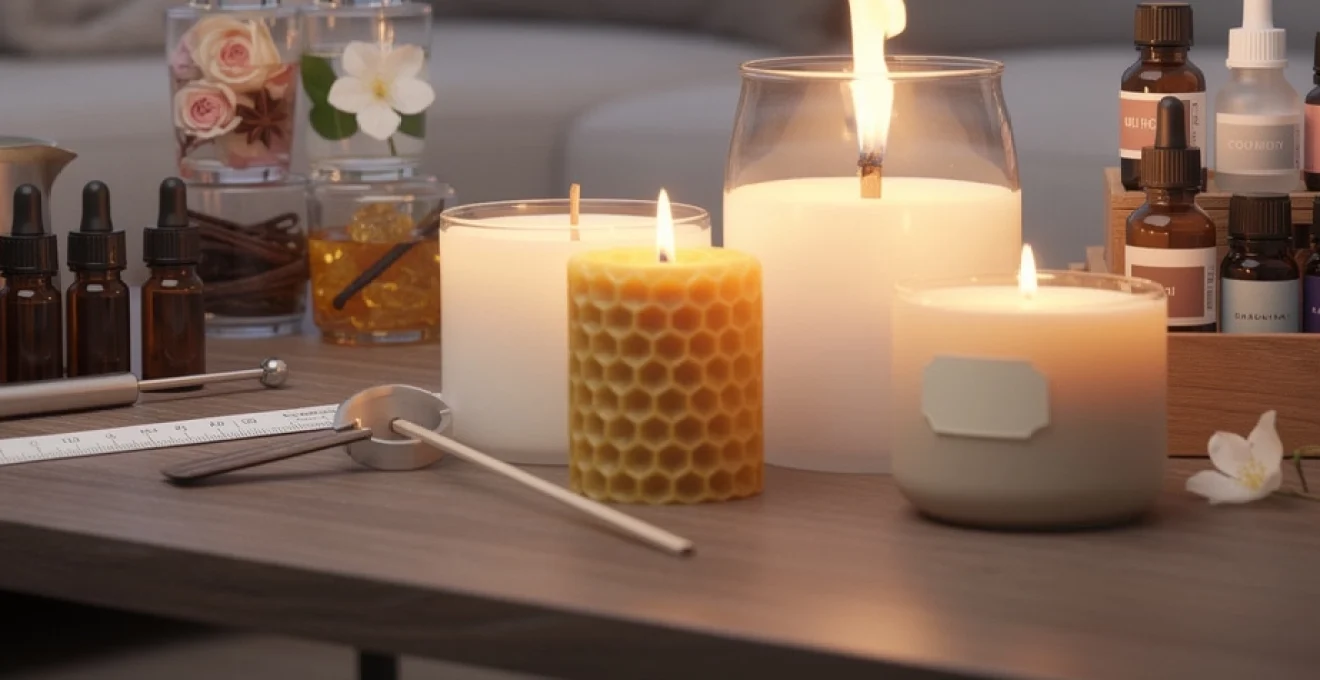
The power of candlelight to transform a space transcends mere illumination. When you enter a room graced by the warm glow of carefully selected candles, you’re immediately enveloped by an atmosphere that speaks to comfort, relaxation, and personal sanctuary. The science behind this transformation involves intricate chemistry, thoughtful design, and an understanding of how scent interacts with our emotions and memories. Modern candle crafting has evolved into a sophisticated art form that combines technical precision with creative expression, allowing you to curate environments that reflect your unique personality whilst promoting wellbeing through carefully orchestrated sensory experiences.
Today’s discerning consumers seek more than simple fragrance dispersal—they desire candles that serve as decorative focal points, aromatherapy tools, and expressions of individual style. The candle industry has responded by developing innovative formulations, sustainable materials, and customisation options that empower you to create truly bespoke atmospheric experiences. Understanding the technical foundations of candle composition enables you to make informed choices that align with your aesthetic preferences, health considerations, and environmental values.
Understanding candle wax compositions: soy, paraffin, beeswax and coconut blends
The foundation of any quality candle lies in its wax composition, which determines burn characteristics, scent throw, aesthetic appearance, and environmental footprint. Each wax type possesses distinct molecular properties that influence how fragrance oils disperse, how cleanly the candle burns, and how the finished product performs in various ambient conditions. The selection of wax represents a fundamental decision that cascades through every aspect of candle performance, from initial lighting to the final moments of burn time.
Natural waxes have gained considerable market share as consumers increasingly prioritise sustainability and health-conscious choices. Plant-based alternatives offer renewable sourcing, biodegradability, and reduced emissions compared to petroleum-derived options. However, each wax type presents unique advantages and considerations that merit careful evaluation based on your specific priorities and intended applications.
Soy wax properties and Clean-Burning characteristics for home fragrance
Derived from hydrogenated soybean oil, soy wax has established itself as the premium choice for health-conscious consumers seeking sustainable home fragrance solutions. The molecular structure of soy wax creates a lower melting point—typically between 46°C and 49°C—which facilitates even wax pool formation and consistent fragrance release throughout the candle’s lifespan. This characteristic proves particularly advantageous for container candles, where complete wax liquefaction prevents tunnelling and maximises burn efficiency.
The clean-burning properties of soy wax stem from its vegetable origin, producing minimal soot and releasing negligible toxins into your living space. Studies indicate that soy candles generate approximately 90% less soot than paraffin alternatives, making them ideal for individuals with respiratory sensitivities or those seeking to maintain pristine interior environments. The natural composition allows for superior fragrance oil absorption, with quality soy wax accommodating fragrance loads between 8% and 12% by weight whilst maintaining structural integrity.
Soy wax presents a creamy, opaque appearance that lends itself beautifully to rustic and natural aesthetic preferences. The material demonstrates excellent adhesion to glass containers, reducing the likelihood of wet spots or separation that can compromise visual appeal. However, soy wax’s softer consistency makes it less suitable for pillar candles or free-standing forms without additives, as it may struggle to maintain rigid shapes in warmer ambient temperatures.
Paraffin wax molecular structure and scent throw performance
Paraffin wax, refined from petroleum by-products, remains the most widely utilised candle wax globally due to its exceptional fragrance-holding capacity and cost-effectiveness. The molecular chains within paraffin create a crystalline structure that achieves higher melting points—typically 54°C to 60°C—enabling the production of robust pillar candles and sculpted forms that maintain their shape under varied conditions. This structural integrity has made paraffin the traditional choice for decorative and functional candles across commercial applications.
The scent throw performance of paraffin wax represents its most significant competitive advantage. The material
The scent throw performance of paraffin wax represents its most significant competitive advantage. The material can accommodate fragrance loads of 10–15% while still maintaining structural stability, resulting in a powerful hot and cold scent throw that quickly fills larger rooms. For those seeking an immediate olfactory impact—such as in open-plan living areas or during gatherings—paraffin-based scented candles often deliver the strongest perceived fragrance intensity. However, this performance is balanced against environmental and health considerations, as paraffin combustion can generate more soot and volatile organic compounds than natural alternatives, making proper ventilation and wick maintenance especially important.
From an aesthetic standpoint, paraffin wax cools to a smooth, glossy finish that suits contemporary and luxury candle designs. Its versatility allows for vibrant colour saturation and intricate mould work, supporting elaborate pillar shapes, taper candles, and novelty forms. When evaluating paraffin candles for a cozy atmosphere, you may prioritise their superior scent throw and visual precision while remaining mindful of burn practices—such as trimming wicks and limiting burn times—to mitigate soot and preserve indoor air quality.
Natural beeswax benefits and honey-toned aesthetic appeal
Beeswax occupies a unique position in candle craftsmanship, bridging functional performance with a naturally luxurious character. Secreted by honeybees and purified for candle use, beeswax has a higher melting point—typically around 62–65°C—which produces a slow, long-lasting burn ideal for extended evening use. This density translates into exceptional burn times, making beeswax candles a compelling choice if you want to enjoy a soft, steady flame over many hours without frequent replacement.
One of beeswax’s most distinctive attributes is its subtle, naturally sweet aroma, often described as honeyed with faint floral undertones. Even unscented beeswax candles contribute gently to a room’s ambience, adding a warm olfactory backdrop that pairs beautifully with low lighting and natural materials. Many users appreciate that beeswax emits negative ions when burning, which some studies suggest may help bind airborne particulates such as dust and pollen, supporting a cleaner-feeling indoor environment, although these effects should be viewed as complementary rather than strictly therapeutic.
Visually, beeswax offers a rich, golden hue that deepens as the wax ages, lending authenticity and artisanal charm to any décor scheme. The wax cools to a firm, slightly textured surface that suits tapers, pillars, and rolled honeycomb designs, often associated with rustic, heritage, or cottage-inspired interiors. For those curating a cozy atmosphere with a traditional or nature-based aesthetic, beeswax candles deliver a tactile, heritage quality that synthetic alternatives struggle to replicate, all while aligning with preferences for minimally processed, naturally derived materials.
Coconut-apricot wax blends for enhanced fragrance distribution
Coconut-apricot wax blends represent a new generation of luxury candle formulations designed to optimise fragrance delivery and aesthetic refinement. Derived primarily from coconut and apricot kernel oils, these hybrid waxes offer a low melting point and an exceptionally smooth, creamy texture that melts quickly into an even wax pool. This rapid liquefaction promotes efficient fragrance diffusion at lower temperatures, allowing complex scent profiles to bloom fully without excessive heat or smoke.
From a performance perspective, coconut-apricot blends are prized for their superior fragrance distribution and balanced burn. Their molecular structure supports high fragrance loads—often comparable to or exceeding premium soy wax—while maintaining a clean, stable flame. For you as a home fragrance enthusiast, this means a scented candle that begins to perfume the room within minutes of lighting, sustaining a nuanced, layered aroma throughout the entire burn cycle. Many artisan chandlers favour these blends for sophisticated olfactory compositions where subtle base notes and delicate florals must remain discernible over time.
Aesthetically, coconut-apricot wax cools to a velvety, off-white finish that radiates understated elegance, aligning well with minimalist, spa-inspired, or contemporary interiors. The wax adheres strongly to glass vessels, reducing frosting and surface imperfections that can distract from a premium presentation. While these blends are typically more expensive than standard soy or paraffin, their elevated performance, sustainable vegetable origin, and refined visual appeal make them a compelling investment when you are curating a truly bespoke, cozy atmosphere with personalised and scented candles.
Fragrance oil formulation and olfactory pyramid design
Beyond wax selection, the true personality of a personalised scented candle emerges from its fragrance formulation and olfactory architecture. Perfumers structure candle scents using an olfactory pyramid composed of top, heart, and base notes, each unfolding over time as the candle burns. This pyramid approach ensures that your candle does more than simply smell “nice”—it evolves, telling a story that supports specific moods, rituals, and interior design concepts.
Crafting a balanced scented candle resembles composing a piece of music: high, bright notes capture your attention first, while deeper chords linger and give the experience emotional depth. By understanding how different fragrance families behave within wax and at varying temperatures, you can select or design personalised candles that align with your lifestyle—whether you want invigorating morning energy, a soft backdrop for concentration, or a deeply cocooning ambience for evening wind-down. Let us examine each layer of the fragrance pyramid and how it contributes to a cozy home atmosphere.
Top notes selection: citrus, herbal and aldehydic accords
Top notes form your first impression of a scented candle, typically emerging within the initial minutes of lighting. These molecules are lighter and more volatile, meaning they evaporate quickly and provide that immediate “lift” when you enter a room. Citrus accords—such as bergamot, lemon, mandarin, and grapefruit—are popular top-note choices for home fragrance, delivering a sense of cleanliness, clarity, and optimism that can make even small spaces feel brighter and more open.
Herbal and green top notes, including rosemary, basil, eucalyptus, and mint, introduce a fresh, aromatic character that works especially well in kitchens, bathrooms, and workspaces. When combined with soft florals or woods, these herbal touches prevent a cozy environment from feeling stuffy or overly sweet, adding a subtle “breath of air” effect. Aldehydic accords—famously used in fine perfumery—bring a sparkling, slightly soapy brightness, ideal for those who love a refined, luxurious twist on clean-scented candles.
When choosing personalised or custom-blended candles, consider how you want a room to greet you: do you want a burst of citrus to energise your morning routine, or a gentle herbal veil that encourages mindful breathing? Top notes will dissipate within 30–60 minutes of burning, but they set the tone for the entire olfactory experience, much like the opening lines of a book invite you into the narrative that follows.
Heart notes composition: floral absolutes and spice complexes
Heart notes, sometimes called middle notes, form the core identity of a scented candle and typically emerge once the wax pool has formed and the initial top notes begin to soften. This stage can last for the majority of the burn, making heart notes especially important when your goal is to create a consistent cozy atmosphere over several hours. Florals—such as rose, jasmine, ylang-ylang, and lavender—are classic heart-note materials that bring warmth, romance, and comfort to interior spaces.
High-quality floral absolutes and natural extracts add nuance, often revealing surprising subtleties as the candle warms. For instance, lavender can lean herbal and clean, while jasmine may feel opulent and enveloping. Spice complexes featuring cardamom, clove, cinnamon, or nutmeg introduce a gourmand, kitchen-adjacent comfort, reminiscent of baking or mulled drinks by the fire. These accords are particularly effective in autumn and winter, when you want your home to feel like a protective cocoon against the cold.
Balancing florals and spices requires careful formulation; too much spice can overwhelm a small room, while overly heady florals may feel cloying in warm weather. When personalising your candle collection, ask yourself which scents you associate with your most relaxing memories—perhaps a garden in bloom, a favourite dessert, or a festive gathering. Integrating these associations into the heart notes helps transform your scented candles from simple décor items into emotional touchstones that make your space feel uniquely yours.
Base notes engineering: woody resins, vanilla and amber fixatives
Base notes provide the structural backbone of a fragrance, anchoring the composition and extending its longevity both in the wax and in the air. In candle design, base notes are crucial for creating the “cozy” dimension that lingers long after the flame is extinguished. Woody materials such as cedarwood, sandalwood, patchouli, and vetiver impart warmth, depth, and a sense of grounded tranquillity, pairing beautifully with soft textiles, dim lighting, and tactile home accessories.
Resins and balsams—like benzoin, labdanum, frankincense, and myrrh—add a slightly smoky, meditative quality, ideal for reflective evenings, reading nooks, or yoga and meditation corners. Vanilla, tonka bean, and amber accords act as both olfactory comfort food and technical fixatives, helping more volatile notes cling to the air and the wax matrix. Their creamy sweetness rounds sharp edges in citrus or spice-heavy formulas, contributing to the “hug in a candle” effect many of us crave after a demanding day.
From an engineering perspective, selecting the right combination of base notes is akin to choosing the foundation for a building: get it right, and everything above feels stable and harmonious. When you explore personalised scented candles, pay attention to descriptions mentioning “woody,” “amber,” or “gourmand” bases if you want an enveloping, long-lasting scent that persists gently on linens, upholstery, and the general ambient aura of your home.
Essential oil integration versus synthetic fragrance compounds
A key decision in fragrance formulation is whether to rely on essential oils, synthetic aroma molecules, or a blend of both. Essential oils, distilled or expressed from botanicals, appeal to those seeking a more natural approach to home fragrance and align with many aromatherapy principles. Lavender, eucalyptus, sweet orange, and peppermint essential oils, for example, are widely used to promote relaxation, clarity, or focus, making them excellent choices for candles designed to support specific wellbeing rituals.
However, essential oils alone can present technical challenges in candle making. Some degrade under high heat, have limited scent throw, or introduce variability from batch to batch due to natural crop differences. Synthetic fragrance compounds, by contrast, offer greater stability, consistency, and the ability to recreate complex accords such as sea breeze, cotton, or abstract ambers that do not exist in nature. Many high-end candle houses therefore adopt a hybrid approach, using essential oils for authenticity and therapeutic nuance, supported by synthetics for longevity and balance.
For you as a consumer, the choice often comes down to priorities: do you value a fully natural ingredient list above all else, or is a strong, long-lasting, and precisely crafted fragrance profile more important for your cozy atmosphere at home? Reading product descriptions and, where available, safety data sheets can help you understand how a brand formulates its scented candles. Whichever route you choose, ensure that fragrances comply with recognised standards (such as IFRA guidelines) to support safe, comfortable use in enclosed spaces.
Wick selection technology and flame dynamics
While wax and fragrance often receive the most attention, wick technology plays an equally critical role in how a personalised scented candle performs. The wick functions as the engine of the candle, drawing molten wax upwards through capillary action and regulating how quickly that fuel is consumed. Too small a wick results in tunnelling and weak fragrance release; too large a wick leads to smoking, overheating, and reduced burn time.
Modern chandlers carefully test wick types, diameters, and constructions for each specific wax and fragrance combination, a process known as wick optimisation. Understanding the basics of wick behaviour can help you diagnose common candle issues at home and choose products engineered for consistent, safe burning. Let us explore the primary wick technologies you are likely to encounter when curating your cozy candle collection.
Cotton core versus wood wick burning mechanisms
Cotton-core wicks remain the industry standard for most container and pillar candles. These wicks are typically braided or knitted from cotton fibres, sometimes with a paper or cotton core to maintain stiffness. As the candle burns, the wick absorbs liquid wax, which vaporises at the flame and combusts to produce light, heat, and fragrance dispersion. Properly sized cotton wicks create a teardrop-shaped flame and an even wax pool extending close to the vessel edge within two to four hours of lighting.
Wood wicks, often crafted from sustainably sourced hardwoods, offer a different sensory profile and burn mechanism. Rather than a single fibre bundle, they feature a flat or slightly curved strip of wood that crackles gently as it burns, mimicking the sound of a miniature fireplace. This subtle auditory dimension can significantly enhance a cozy atmosphere, particularly in quiet evening settings or reading corners. Wood wicks tend to produce a wider, lower flame and may require careful trimming and initial lighting technique to ensure consistent performance.
When deciding between cotton and wood wicks, consider both aesthetics and practicality. Cotton wicks generally provide a taller, more traditional flame and are forgiving across a range of burn conditions, making them ideal for everyday use. Wood wicks, with their modern appearance and ambient crackle, shine in statement vessels and personalised candles created as gifts or focal décor pieces. In both cases, appropriate trimming and adherence to recommended burn times are essential for optimal safety and performance.
Wick diameter calculations for optimal wax pool formation
Selecting the correct wick diameter for a given candle is a technical process that balances vessel size, wax formulation, and fragrance load. The goal is to achieve a full, even wax pool—reaching near the edges of the container—within approximately three to four hours of the first burn. This prevents tunnelling, where a narrow well forms around the wick, wasting wax and diminishing scent throw. Manufacturers use burn tests and wick charts to determine which wick series and size will deliver this performance under typical home conditions.
As a rule of thumb, larger vessel diameters and harder waxes (such as high-melting-point paraffin or beeswax) require thicker or multiple wicks, whereas softer, low-melting-point waxes like soy or coconut blends can perform well with smaller wicks. Heavier fragrance loads and the inclusion of colourants can also affect fuel behaviour, sometimes necessitating an up-sized wick to compensate for additives that slightly impede combustion. This is why two candles of the same diameter but different formulas may use different wick sizes even within the same brand.
For users, understanding the relationship between wick diameter and wax pool formation offers a practical troubleshooting tool. If your candle consistently leaves a thick ring of unmelted wax after several burns, the wick may be undersized or your burn sessions too short. Conversely, if the flame appears overly large, flickers aggressively, or causes the vessel to become very hot, the wick could be oversized for the composition. In such cases, shorten burn durations, keep the wick meticulously trimmed, and discontinue use if safety is in doubt.
Self-trimming wick technology and mushrooming prevention
Advancements in wick engineering have led to self-trimming or “self-consuming” designs aimed at minimising maintenance and improving safety. These wicks are constructed to curl slightly as they burn, positioning the tip of the wick into the hottest part of the flame where excess carbon is more completely combusted. This reduces the formation of “mushrooming”—the bulbous carbon build-up that can appear at the wick tip—along with associated soot and smoke.
Mushrooming is not inherently dangerous, but it often indicates that the wick is burning too hot for the wax and fragrance system, or that it has grown too long between trims. Excess carbon can drop into the wax pool, discolouring the surface and potentially affecting scent purity. Self-trimming wicks address these issues by promoting a consistent flame height and cleaner combustion over the lifespan of the candle, particularly important in heavily fragranced or coloured formulations.
As a candle owner, you still play an active role in wick care, even with self-trimming technologies. Trimming wicks to approximately 3–5 mm before each burn, removing debris from the wax pool, and avoiding drafts go a long way toward preventing mushrooming and soot. Think of wick care as similar to tuning a musical instrument: small, regular adjustments help your personalised scented candles perform at their best, delivering the clean, steady glow that defines a truly cozy atmosphere.
Personalisation techniques: custom labels, embedded objects and colour layering
Personalisation transforms scented candles from generic décor items into meaningful extensions of your identity, memories, and aesthetic preferences. Custom labels, colour schemes, and embedded elements allow you to tell a visual story even before the candle is lit, making each piece feel more like a keepsake than a consumable. In a world where we increasingly seek unique, emotionally resonant objects for our homes, personalised candles offer a highly accessible form of self-expression.
Custom labels provide the most straightforward entry point into candle personalisation. You can incorporate names, dates, quotes, or even coordinates of a special place, turning a simple jar candle into a memento of a wedding, anniversary, or milestone. Typography, illustration, and material choices—such as textured paper or metallic foiling—contribute to the overall mood, whether you prefer minimalist, romantic, or playful designs. This approach is particularly powerful for gift-giving, where a tailored label elevates the perceived thoughtfulness and care behind the present.
For a more tactile, three-dimensional effect, embedded objects within the wax—such as dried botanicals, crystals, or seashells—add depth and intrigue. When used responsibly and placed away from the direct flame path, these inclusions can evoke specific themes: think lavender sprigs and chamomile buds for a countryside retreat, or rose petals and quartz for a self-love ritual candle. It is important that embedded materials are non-flammable or positioned safely, as they are primarily decorative and should never interfere with the wick or combustion zone.
Colour layering techniques take personalisation a step further by staging the visual experience over time. Multiple wax pours in different hues create bands or gradients that echo fragrance transitions or seasonal themes—warm amber and burgundy for autumn evenings, cool blues and greys for calming, coastal-inspired spaces. As the candle burns down, each layer reveals itself like chapters in a book, reinforcing the narrative quality of your home fragrance. When designing or commissioning such candles, ensure that all layers share compatible wax and wick systems to maintain consistent performance from top to bottom.
Vessel selection: glass hurricane jars, ceramic containers and tin receptacles
The vessel you choose for your personalised scented candles significantly influences both safety and style, acting as the interface between technical performance and visual impact. Beyond simply holding the wax, the container affects heat distribution, flame visibility, and how the candle integrates with your interior design. Thoughtful vessel selection can elevate a familiar scent, making it feel more luxurious, rustic, or contemporary depending on the materials and forms you prefer.
Glass hurricane jars and classic tumblers are among the most popular choices for home fragrance, offering transparency that showcases wax colour, embedded elements, and the dancing flame. Thick-walled glass provides stability and heat resistance, while shapes ranging from straight-sided cylinders to softly curved forms lend versatility across décor styles. Clear glass complements almost any palette, but tinted or frosted finishes can introduce additional mood—smoky grey for a Dark Academia-inspired reading corner, or soft amber for a vintage, candlelit ambiance.
Ceramic containers introduce a tactile, artisanal dimension that pairs beautifully with cozy, layered interiors. Glazed stoneware, hand-thrown pottery, or matte porcelain vessels each bring distinct character, often doubling as reusable cups or storage jars once the candle has fully burned. The opacity of ceramic focuses attention on the glow rather than the wax itself, creating a diffused, lantern-like effect that feels particularly soothing in bedrooms and bathrooms. When choosing ceramic candle vessels, ensure they are specifically rated for high temperatures and feature adequate thickness to withstand repeated heating and cooling cycles.
Metal tins, particularly those made from aluminium or steel with secure lids, offer a practical and travel-friendly option for personalised scented candles. Lightweight and shatter-resistant, tins are ideal for smaller spaces, guest rooms, or gifting scenarios where portability matters. Their compact size also encourages experimentation with multiple scents, allowing you to create curated sets aligned with different moods or seasons. From an aesthetic standpoint, brushed, matte, or coloured finishes can range from industrial chic to playful and decorative, depending on your chosen theme.
Ultimately, vessel selection should harmonise with both your candle’s technical requirements and your broader interior styling. Ask yourself how and where you plan to use each candle: will it sit centre stage on a coffee table, be tucked into a bookshelf vignette, or travel with you on weekend getaways? Matching vessel type to usage context ensures not only a cohesive look, but also a safe, enjoyable burn that enhances your cozy atmosphere rather than distracting from it.
Scent psychology and mood enhancement through aromatherapy principles
The emotional power of personalised and scented candles rests on more than aesthetics and chemistry; it also draws upon scent psychology and aromatherapy principles. Our olfactory system connects directly to the limbic system—the part of the brain involved in emotion, memory, and motivation—meaning that fragrances can rapidly influence how we feel and behave. By consciously selecting candle scents for specific rooms and routines, you can design a home environment that supports relaxation, focus, connection, or rejuvenation as needed.
Calming aromas such as lavender, chamomile, and soft woods are commonly used in bedrooms and lounges to encourage unwinding and restful sleep. Studies have shown that lavender, for example, can modestly improve sleep quality and reduce perceived anxiety, especially when combined with a consistent bedtime ritual. Lighting a lavender-vanilla blend candle 30–60 minutes before bed, dimming screens, and engaging in quiet activities creates a multi-sensory signal to your nervous system that it is time to slow down, much like a gentle sunset for your mind.
In contrast, invigorating scents featuring citrus, mint, or eucalyptus can promote alertness and clarity, making them ideal for home offices, kitchens, and morning routines. Research into citrus aromatics suggests associations with improved mood and reduced fatigue, while peppermint has been linked to enhanced cognitive performance in some contexts. If you struggle with mid-afternoon energy slumps, a brightly scented candle combining grapefruit, basil, and mint can act as an olfactory “reset button,” helping you re-engage with tasks without relying solely on caffeine.
For social spaces such as dining rooms and living areas, warm gourmand and spicy accords—think cinnamon, cardamom, vanilla, and soft amber—foster a sense of comfort, hospitality, and togetherness. These scents tap into powerful food-related memories and cultural rituals, making guests feel welcome and relaxed. Have you ever noticed how a home that smells faintly of baking instantly feels more inviting? Well-chosen candles can recreate that effect even when the oven is off, providing the emotional warmth of shared meals and celebrations on an everyday basis.
Finally, consider how personalised scent rituals can support emotional resilience and self-care. Perhaps you reserve a particular blend—such as sandalwood, rose, and frankincense—for journaling, meditation, or yoga, allowing your brain to associate that aroma with introspection and grounding. Over time, simply lighting that candle can ease the transition into a more mindful state, functioning like a sensory mantra. By aligning fragrance choices with your intentions for each space and moment, you transform scented candles from passive décor into active tools for shaping mood, mindset, and overall wellbeing within your home.