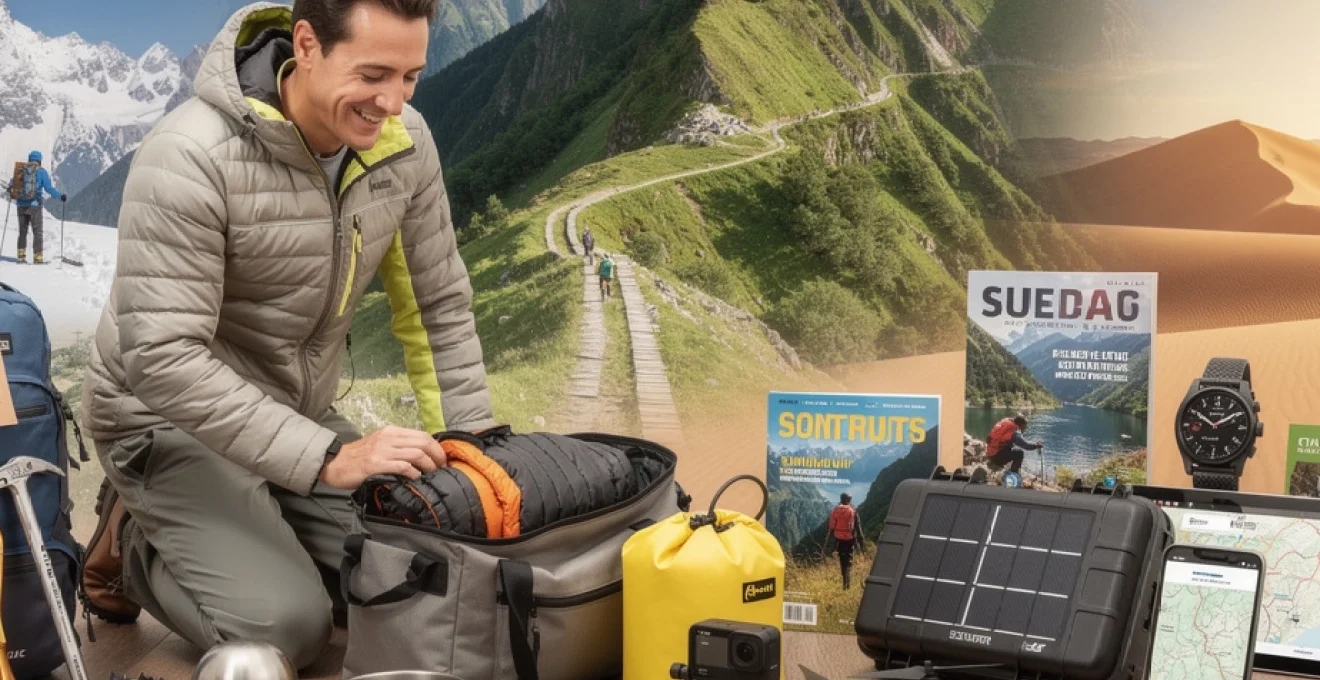
Adventure travellers represent a unique breed of explorers who push boundaries, seek adrenaline rushes, and thrive in challenging environments from alpine peaks to tropical rainforests. Selecting the perfect gift for these intrepid souls requires understanding not just their passion for exploration, but also the practical demands of extreme travel conditions. Whether your adventure enthusiast is planning to summit Kilimanjaro, dive with great white sharks, or trek through Patagonian wilderness, the right gift can transform their experience from merely memorable to genuinely extraordinary.
The adventure travel market has experienced remarkable growth, with global adventure tourism valued at approximately £445 billion in 2023 and projected to reach £1.2 trillion by 2030. This surge reflects a fundamental shift in how people approach travel, moving away from passive sightseeing towards active, immersive experiences that challenge physical and mental limits. For gift-givers, this presents both opportunity and complexity: the sheer variety of adventure disciplines means understanding your recipient’s specific interests becomes paramount to selecting something they’ll genuinely treasure.
Modern adventure travel encompasses everything from multi-day mountaineering expeditions requiring technical equipment to wildlife photography safaris demanding specialised camera gear. The best gifts either enhance safety and performance in challenging conditions, or provide experiences that create lasting memories. Statistics show that 73% of adventure travellers prioritise gear quality over price, recognising that reliability in remote environments isn’t negotiable. This mindset should guide your gift selection process, encouraging investment in premium items that won’t fail when it matters most.
Adventure travel gear categories: technical equipment for extreme environments
Understanding the technical requirements of different adventure disciplines forms the foundation of intelligent gift selection. Extreme environment travel demands equipment engineered to withstand conditions that would destroy conventional gear, from sub-zero alpine temperatures to saltwater immersion in ocean environments. The adventure gear market has responded with increasingly sophisticated materials and designs, incorporating aerospace-grade alloys, advanced synthetic fabrics, and miniaturised electronics that maintain functionality across temperature extremes.
Mountaineering and alpine climbing equipment: carabiners, ice axes, and crampons
Mountaineering gifts require careful consideration of certification standards and compatibility with existing equipment systems. Quality carabiners from manufacturers like Black Diamond or Petzl feature UIAA certification, indicating they’ve passed rigorous strength testing with minimum breaking loads exceeding 20 kilonewtons. Ice axes represent another excellent gift choice, with modern designs incorporating carbon fibre shafts that reduce weight whilst maintaining structural integrity. Technical crampons with adjustable front points suit various climbing styles, from French technique on moderate slopes to front-pointing on vertical ice walls.
When selecting mountaineering equipment as gifts, understanding the recipient’s climbing style proves essential. Alpine climbers prioritising speed appreciate lightweight gear, whilst winter mountaineers in Scottish conditions might prefer more robust, heavier equipment that withstands repeated impacts. Current market data indicates that specialist mountaineering equipment purchases average £340 per transaction, reflecting the premium pricing of certified safety equipment. This investment threshold shouldn’t deter gift-givers, as even accessories like belay devices, prusik loops, or high-quality climbing gloves represent thoughtful, practical presents.
Ultralight backpacking gear: titanium cookware and packable down insulation
The ultralight backpacking movement has revolutionised adventure travel, with enthusiasts obsessively shaving grams from their pack weight to enhance mobility and reduce fatigue. Titanium cookware exemplifies this philosophy, offering strength-to-weight ratios that exceed stainless steel or aluminium alternatives. A titanium pot weighing just 95 grams can boil water for dehydrated meals whilst withstanding years of campfire abuse. Similarly, modern packable down jackets compress to fist-sized bundles yet provide exceptional warmth-to-weight ratios, with quality 800-fill-power down offering thermal efficiency that synthetic alternatives struggle to match.
Gifting ultralight equipment requires understanding the compromises inherent in weight reduction. Ultra-compact sleeping bags rated to -5°C might weigh only 600 grams but typically feature narrow cut designs that restrict movement. Frameless ultralight backpacks excel for loads under 10 kilograms
and offer minimal padding, so they suit seasoned backpackers who have already dialled in their gear list. When you’re gifting for someone newer to adventure travel, it’s often wiser to prioritise durability and comfort over chasing the absolute lowest base weight. Look for trusted ultralight brands that provide clear temperature ratings, repair policies, and transparent fill-power specifications rather than vague “four-season” claims. Even single items like a titanium mug, a featherweight down gilet, or a compact inflatable sleeping mat can significantly improve your recipient’s backcountry comfort without overhauling their entire kit.
Water sports adventure kit: dry bags, personal locator beacons, and waterproof action cameras
For travellers who thrive on kayaking expeditions, coastal sailing routes, canyoning, or stand-up paddleboarding, effective water protection and emergency signalling are non-negotiable. High-quality dry bags from brands such as Sea to Summit or Ortlieb use welded seams, roll-top closures, and IPX-rated materials to keep equipment dry even in full immersion scenarios. Gifting a set of differently sized dry bags — from 5-litre electronics pouches to 20-litre clothing sacks — helps your adventure traveller organise and protect gear across multiple water-based trips.
Personal Locator Beacons (PLBs) offer another layer of security in remote marine environments where mobile coverage is non-existent. Modern PLBs weigh less than 150 grams yet transmit distress signals on the 406 MHz frequency monitored by international search-and-rescue satellites, often with integrated GPS for precise location data. Pairing a PLB with a waterproof action camera such as a GoPro Hero or DJI Osmo Action allows your giftee not only to stay safer on the water but also to capture immersive footage of rapids, reef breaks, or coastal wildlife. When shopping, pay attention to depth ratings, battery life, and whether accessories like helmet mounts or chest harnesses are included or sold separately.
Desert and hot climate essentials: solar-powered chargers and hydration bladder systems
Adventure travellers drawn to Saharan crossings, Middle Eastern wadis, or Australian outback tracks face a different set of challenges: intense solar exposure, extreme daytime temperatures, and scarce water sources. Solar-powered chargers have evolved considerably in recent years, with high-efficiency monocrystalline panels now delivering usable charging currents even under hazy skies. Lightweight folding panels in the 20–28-watt range strike a sweet spot for backpackers, providing enough output to recharge smartphones, GPS units, headlamps, and compact cameras over the course of a day’s hiking.
Hydration bladder systems, meanwhile, fundamentally change how efficiently travellers can manage water intake in hot climates. A 2–3 litre bladder with insulated hose routing allows sips to be taken regularly without breaking stride, which is far more effective for thermoregulation than gulping from a bottle every hour. When choosing a hydration gift, look for bladders made from BPA-free materials with wide-mouth openings for easy cleaning, as well as bite valves with on/off switches to prevent leaks inside rucksacks. Complementary items such as UV-protection buffs, wide-brimmed packable hats, or lightweight sun shirts with UPF 50+ fabric all make excellent add-ons for desert-focused adventures.
Experiential adventure gifts: adrenaline-fuelled activities and expeditions
While technical gear improves performance and safety, experiential adventure gifts cater to the growing trend of valuing experiences over possessions. Surveys in the UK and EU consistently show that over 60% of millennials and Gen Z prefer to receive travel experiences as gifts rather than physical items. For the adventure traveller in your life, funding a bucket-list expedition, skills course, or adrenaline activity can be more meaningful than another gadget. The key is aligning the experience with their current fitness, skills, and time availability, ensuring it feels aspirational but still achievable.
Multi-day trekking experiences: kilimanjaro summit routes and inca trail permits
Iconic trekking routes such as Mount Kilimanjaro or Peru’s classic Inca Trail hold almost mythical appeal for adventure travellers. Gifting a contribution towards — or even the full cost of — one of these expeditions can literally be life-changing. For Kilimanjaro, which attracts over 35,000 trekkers annually, it’s important to understand the different routes available, from the shorter but steeper Marangu path to the longer, more gradual Lemosho and Northern Circuit routes that offer better acclimatisation. Selecting a reputable, locally engaged operator that employs certified guides and fair-wage porters is just as critical as choosing dates and routes.
The Inca Trail, limited to 500 permits per day (including guides and porters), requires early planning — in peak season, permits can sell out six months in advance. As a gift-giver, you can coordinate with your recipient to lock in dates and pay the deposit for a licensed operator that handles permit acquisition. Consider extras such as pre- or post-trek hotel nights, gear rental vouchers, or high-quality trekking poles to round out the present. These multi-day trekking experiences not only challenge physical endurance but also immerse your traveller in rich cultural landscapes, from Chagga villages around Kilimanjaro to Andean communities in Peru.
Extreme sports adventures: skydiving vouchers, bungee jumping, and paragliding courses
For adrenaline purists, few gifts rival the thrill of stepping out of an aircraft at 13,000 feet or leaping from a suspension bridge above a glacial river. Skydiving vouchers are widely available across Europe, North America, and Australasia, often including tandem jumps that require no prior experience. When choosing a provider, check national parachuting association accreditation and safety statistics, and consider add-ons like in-flight video packages so your recipient can relive their first freefall.
Bungee jumping experiences, from Queenstown’s Kawarau Bridge to South Africa’s Bloukrans Bridge, also make powerful gifts for travellers who love to flirt with their comfort zones. For those interested in more sustained skills development rather than one-off thrills, beginner paragliding courses provide structured progression from tandem flights to supervised solo glides. A multi-day introductory course in a destination such as Annecy, Interlaken, or Ölüdeniz can be integrated into a broader trip, giving your giftee a new perspective — literally — on mountain and coastal landscapes. Always confirm age, weight, and medical restrictions before committing to high-intensity adventure sports vouchers.
Wildlife expedition packages: galapagos island tours and amazon rainforest safaris
Some of the most impactful travel gifts involve close encounters with wildlife in their natural habitats, guided by conservation-focused operators. The Galapagos Islands, a UNESCO World Heritage Site, host highly regulated small-ship cruises and land-based tours that introduce travellers to marine iguanas, giant tortoises, and blue-footed boobies. A week-long expedition cruise is a premium gift — often exceeding £3,000 — but shorter, land-based packages combined with day trips can be a more accessible option for budget-conscious givers.
Amazon Rainforest safaris, whether in Peru, Ecuador, Brazil, or Bolivia, immerse visitors in one of the planet’s most biodiverse ecosystems. When funding such an experience, prioritise lodges and tour companies that work with local communities and adhere to responsible tourism standards, including low-impact accommodation and ethical wildlife viewing practices. You might also consider supplemental gifts like a high-quality pair of binoculars, a waterproof field notebook, or a region-specific wildlife guidebook to enhance your recipient’s experience in the field. In an era of biodiversity loss, these wildlife expeditions can foster deeper environmental awareness and advocacy long after the trip ends.
Winter adventure experiences: heli-skiing in whistler and ice climbing in iceland
For travellers who revel in snow and ice, winter-specific adventure experiences offer an electrifying twist on traditional ski holidays. Heli-skiing in destinations like Whistler, Alaska, or the Italian Alps involves being flown by helicopter to untouched powder slopes far from the resort crowds. It’s undeniably a high-budget gift — daily heli-ski packages often start around £800–£1,200 per person — but for seasoned skiers or snowboarders, the chance to carve first tracks on remote glaciers is unforgettable. Ensure your recipient has the requisite off-piste skills and avalanche knowledge, or consider including an avalanche safety course as part of the present.
Ice climbing in Iceland, Norway, or the Scottish Highlands provides a more accessible (and often more affordable) winter thrill. Introductory day courses supply technical equipment such as crampons and ice tools, teaching participants the basics of movement on vertical ice, belaying, and safety systems. As a gift, you can book a guided session that fits into your traveller’s existing itinerary, or choose a multi-day clinic for those aiming to progress further. Complementary gear gifts — insulated mitts, merino base layers, or heated socks — can add warmth and practicality to these cold-climate adventures.
Navigation and communication technology for remote destinations
As adventure travellers venture further off the beaten path, robust navigation and communication tools become essential safety nets rather than optional luxuries. In many of the world’s prime adventure destinations — from Greenland’s icecap to the Pamir Highway — mobile phone coverage can be sporadic or non-existent. The latest generation of satellite communicators, GPS units, and emergency beacons dramatically improves situational awareness and response times in emergencies. When choosing tech-focused gifts, your goal is to give your traveller confidence to explore remote regions while maintaining a lifeline to the outside world.
Satellite communication devices: garmin inreach and spot X messenger systems
Two-way satellite messengers such as the Garmin inReach series and Spot X have transformed how adventurers remain connected beyond mobile coverage. These compact devices allow users to send and receive text messages via satellite, share location data with friends and family, and trigger SOS alerts monitored by global emergency response centres. Subscription plans typically range from £10 to £40 per month depending on message volume and tracking frequency, so consider whether you’ll gift several months of service alongside the hardware.
The Garmin inReach Mini 2, weighing just 100 grams, has become particularly popular among thru-hikers and backcountry skiers, offering up to 30 days of battery life in tracking mode. Spot X, with its integrated keyboard, appeals to users who prefer composing longer messages without pairing to a smartphone. As a gift-giver, think about your recipient’s typical adventures: do they travel solo off-grid for days at a time, or primarily join guided trips with existing safety infrastructure? Matching device capability — and ongoing subscription costs — to real-world usage ensures your present remains a welcome asset rather than a neglected gadget.
GPS navigation units: garmin GPSMAP series and suunto watches with topographic mapping
Dedicated GPS navigation units remain invaluable for serious adventure travel, especially in mountainous or forested regions where smartphone mapping struggles with battery life and durability. Handheld devices in the Garmin GPSMAP series, for example, pair high-sensitivity multi-band GNSS receivers with preloaded topographic maps, barometric altimeters, and electronic compasses. Ruggedised casings and IPX7 waterproof ratings allow them to withstand heavy rain, snow, and the occasional river dunking — situations that could spell disaster for an unprotected phone.
For travellers who prefer wrist-based navigation, premium Suunto and Garmin watches with topo mapping capabilities provide an elegant balance of form and function. Models like the Suunto Vertical or Garmin Fenix series offer turn-by-turn trail navigation, route planning, and advanced training metrics in a package that also works as an everyday timepiece. When gifting such a watch, consider battery runtime in GPS mode, compatibility with route-planning platforms like Komoot or AllTrails, and whether your recipient values multisport tracking (for running, cycling, skiing) alongside navigation features. A well-chosen GPS device can feel like giving your traveller a digital mountain guide that never gets tired.
Emergency location transmitters: personal locator beacons (PLB) and EPIRB technology
For truly remote expeditions — ocean crossings, polar treks, or backcountry adventures far from established rescue services — Emergency Position-Indicating Radio Beacons (EPIRBs) and Personal Locator Beacons (PLBs) offer the highest level of distress signalling. While superficially similar to satellite messengers, PLBs and EPIRBs transmit on internationally monitored distress frequencies without relying on a commercial subscription. Once activated, they send a powerful 406 MHz signal (often with embedded GPS coordinates) to the COSPAS-SARSAT satellite network, which in turn alerts the nearest search-and-rescue authority.
EPIRBs are typically registered to vessels and required equipment on many seagoing yachts, while PLBs are designed for individuals and can be carried in a backpack or clipped to a PFD. As a gift, a PLB is perhaps one of the most meaningful items you can give an adventure traveller: it’s essentially a one-button request for rescue when everything else has gone wrong. Just remember that registration with the appropriate national authority is mandatory, and you should coordinate with your recipient so the beacon’s contact and itinerary information remains up to date. Like a seatbelt or avalanche transceiver, a PLB is something you hope they’ll never need but will be profoundly grateful to have if they do.
Adventure photography and documentation equipment
For many travellers, half the joy of an expedition lies in capturing and sharing the journey — whether through cinematic footage, drone panoramas, or printed photo books created back home. High-quality adventure photography gear doesn’t just produce prettier Instagram posts; it also encourages more mindful observation of landscapes, cultures, and wildlife. When choosing photographic gifts, think about how your traveller currently documents their trips. Are they already an avid photographer with a mirrorless camera, or primarily shooting on a smartphone? This will guide whether you prioritise action cameras, drones, or protective cases over new lenses and high-end bodies.
Action camera systems: GoPro hero series and DJI osmo pocket stabilisation
Action cameras are to adventure travellers what dashcams are to rally drivers: compact, rugged, and always ready to capture the unexpected. The latest GoPro Hero models offer 5.3K video, advanced image stabilisation, and waterproof performance down to 10 metres without a housing, making them ideal for everything from mountain biking to snorkelling with turtles. TimeWarp and HyperSmooth modes simplify the process of shooting cinematic hyperlapse sequences or buttery-smooth descent footage without needing a gimbal or complex settings.
For travellers who prefer a more discreet, vlog-style approach, the DJI Osmo Pocket and Pocket 3 combine a tiny gimbal-mounted camera with impressive stabilisation in a jeans-pocket form factor. These devices excel for walk-and-talk storytelling, city explorations, or documenting interactions with locals, as they’re far less intimidating than a large camera rig. As gifts, action camera bundles that include spare batteries, a compact tripod, and a selection of mounts (helmet, chest, handlebar) provide maximum creative flexibility. You might ask yourself: what kind of stories does my traveller want to tell — fast-paced, first-person perspectives, or more reflective narratives? Your answer will steer you toward the right system.
Drone technology for aerial adventure photography: DJI mavic and autel robotics models
Aerial imagery has become a hallmark of modern adventure travel content, revealing perspectives that would previously have required helicopters or mountaineering teams. Foldable drones like the DJI Mavic Air 3, Mavic 3 Classic, or Autel Evo Lite+ offer 4K–5.4K video, obstacle avoidance, and flight times exceeding 30 minutes, all in packages that tuck neatly into a daypack. Intelligent shooting modes — such as orbit, follow-me, and waypoint missions — empower even novice pilots to create sweeping cinematic sequences over ridgelines, waterfalls, or desert dunes.
However, gifting a drone also means gifting responsibility. Many countries now require pilot registration, insurance, and adherence to strict no-fly zones, especially near airports, national parks, or cultural sites. Before surprising someone with a drone, it’s worth checking the regulations in the regions they’re likely to visit and perhaps including a concise drone law guide or online course as part of the present. A spare set of propellers, ND filter kit, or hard-shell drone case also makes a smart accessory gift, ensuring the aircraft survives being bounced around in luggage between flights and 4×4 transfers.
Weatherproof camera protection: pelican cases and peak design camera cubes
High-end camera bodies, lenses, and drones represent significant investments, and adventure travel exposes them to dust, moisture, and impact risks far beyond typical holiday usage. Rugged hard cases from brands like Pelican or Peli Storm provide IP67-rated waterproof and dustproof protection, with customisable foam interiors that cradle delicate gear through baggage handling and off-road journeys alike. For travellers carrying especially expensive setups — think full-frame mirrorless kits or cinema cameras — a properly sized hard case can be the difference between arriving ready to shoot and arriving with a bag of expensive paperweights.
For those who prioritise flexibility and lighter loads, modular camera cubes from companies such as Peak Design, F-Stop, or Shimoda integrate protective padding into regular backpacks or travel duffels. These cubes allow travellers to switch between carry-on, hiking pack, and daypack while keeping their camera kit organised and secure. When gifting, consider your recipient’s existing luggage: do they already have a beloved backpack that could be “camera-ified” with an insert, or would a standalone hard case better suit their travel style? In either case, robust protection ensures their visual stories continue even in the face of tropical downpours or bumpy yak rides.
Subscription-based adventure services and memberships
Not every perfect gift for a traveller needs to be something they can hold in their hands. Subscription-based services and memberships offer ongoing value throughout the year, providing inspiration, route planning tools, education, and community. In a sense, these are gifts that keep “unwrapping” themselves with each new magazine issue, route suggestion, or completed training module. They’re particularly well-suited if you’re unsure about specific gear choices or want to complement a physical present with something that extends the adventure long after a single trip.
Adventure travel magazine subscriptions: national geographic traveller and outside magazine
Print and digital magazine subscriptions remain powerful sources of inspiration for aspiring and seasoned adventure travellers alike. Publications such as National Geographic Traveller, Outside, or Sidetracked combine long-form journalism, immersive photography, and practical destination guides that spark new ideas for expeditions. An annual subscription typically costs far less than a single piece of technical gear but can shape an entire year’s worth of travel planning and daydreaming.
When choosing a magazine gift, consider your recipient’s interests: are they more drawn to human-powered expeditions and environmental storytelling, or to gear reviews and training advice? Many titles now offer combined print-and-digital packages, allowing travellers to download issues for offline reading on flights or buses. You can even pair a subscription with a lightweight e-reader or tablet stand, creating a cosy ritual of planning the next big adventure over coffee and a fresh issue.
Outdoor activity platform memberships: komoot premium and AllTrails pro features
Digital route-planning platforms have quietly become indispensable tools for hikers, cyclists, and trail runners around the world. Premium memberships to services such as Komoot and AllTrails Pro unlock advanced features that can dramatically simplify adventure logistics. Komoot Premium, for example, offers multi-day tour planning, sport-specific maps, weather overlays, and offline navigation across multiple regions — ideal for bikepacking routes, hut-to-hut treks, or long-distance trail runs.
AllTrails Pro, meanwhile, enables offline map downloads, real-time route deviation alerts, and curated lists of top trails by difficulty and user rating. As gifts, these subscriptions are particularly valuable for travellers planning self-guided trips in unfamiliar terrain, where access to reliable, up-to-date route information can mean the difference between a rewarding day out and an epic navigational blunder. You might even pre-load a few dream routes into their account — a Dolomites via ferrata circuit, a Torres del Paine day hike, or a coastal path in Madeira — as a personalised touch.
Adventure training course subscriptions: wilderness medicine and mountain leader qualifications
For committed adventure travellers, formal training can be just as exciting a gift as a new piece of gear, because it expands what they’re safely capable of doing in the wild. Online and in-person courses in Wilderness First Aid or Wilderness Medicine teach skills for managing injuries, hypothermia, altitude sickness, and other emergencies far from definitive care. Many respected providers now offer blended learning models, combining self-paced theoretical modules with practical field days — an ideal structure for busy professionals who travel frequently.
At a more advanced level, contributing towards Mountain Leader (ML), International Mountain Leader (IML), or avalanche safety certifications (such as AIARE in North America or equivalent schemes in Europe) can transform a passionate hillwalker into a competent expedition organiser. These qualifications require time and commitment, so coordinate closely with your recipient before booking. But if they’ve ever talked about leading treks, guiding, or simply feeling more self-reliant in complex terrain, funding part of their training is a profound vote of confidence in their future adventures.
Personalised adventure travel accessories and custom gear
Finally, for travellers who already seem to own every conceivable gadget, personalised adventure accessories add a layer of emotional resonance that generic gear can’t match. Custom-engraved carabiners, monogrammed passport covers, or laser-etched titanium mugs become talismans that accompany them on expedition after expedition. These items don’t need to be expensive or technical; their value lies in their connection to shared memories, private jokes, or long-held dreams.
Think about subtle yet practical personalisation: a dry bag printed with GPS coordinates of their favourite summit; a leather travel journal embossed with their initials and a meaningful quote; or a map art print tracing the route of their first big solo trip. For more technical kit, some brands now offer custom colourways or embroidery on backpacks, duffels, and jackets, allowing you to gift a one-of-a-kind piece that still meets rigorous performance standards. In the end, the perfect gift for a traveller who loves adventure is one that respects both the realities of the environments they move through and the stories that motivate them to keep exploring — and a thoughtfully personalised accessory can bridge those two worlds beautifully.