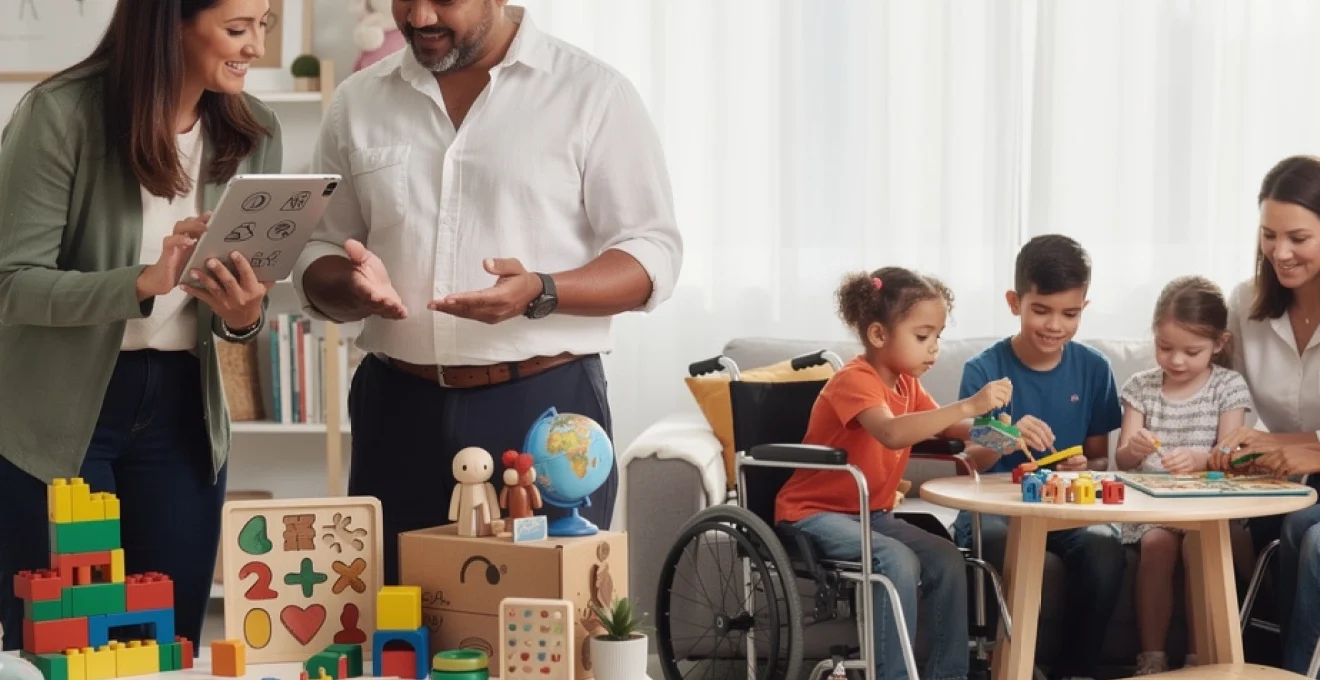
Selecting gifts for children has evolved far beyond simply choosing the latest trending toy or flashy gadget. Modern gift-giving requires a thoughtful approach that balances entertainment value with developmental benefits, ensuring purchases contribute meaningfully to a child’s growth and learning journey. The most successful children’s gifts serve multiple purposes: they captivate young minds, support crucial developmental milestones, and provide lasting value that extends well beyond the initial excitement of unwrapping.
Understanding what makes a gift truly meaningful involves recognising how children learn, develop, and engage with their environment at different stages of their lives. Research consistently demonstrates that the most impactful toys and gifts are those that align with a child’s developmental needs while fostering creativity, problem-solving abilities, and social-emotional growth. This approach transforms gift selection from a potentially overwhelming task into an strategic investment in a child’s future capabilities and interests.
Developmental psychology principles for Age-Appropriate gift selection
Understanding child development psychology forms the foundation of meaningful gift selection. When you align presents with specific developmental stages, you create opportunities for children to practice emerging skills whilst enjoying themselves. This approach ensures that gifts remain engaging and appropriate for extended periods, rather than quickly becoming obsolete as children outgrow them.
Piaget’s cognitive development stages and toy compatibility
Jean Piaget’s cognitive development theory provides invaluable guidance for selecting age-appropriate gifts that support learning progression. During the sensorimotor stage (birth to 2 years), children learn primarily through sensory experiences and motor activities. Gifts that stimulate multiple senses simultaneously prove most effective during this period. Consider toys with varied textures, contrasting colours, and different sounds that encourage exploration and manipulation.
The preoperational stage (2-7 years) marks the emergence of symbolic thinking and language development. Children in this phase benefit from gifts that encourage imaginative play and storytelling. Building blocks, dress-up clothes, and art supplies become particularly valuable as they allow children to express their developing creativity whilst practising communication skills. During this stage, children also begin to understand basic concepts about the world around them, making educational toys that introduce letters, numbers, and simple scientific concepts highly beneficial.
As children enter the concrete operational stage (7-11 years), their logical thinking abilities develop significantly. They can now understand rules, categorisation, and cause-and-effect relationships more clearly. Gifts that challenge their problem-solving abilities whilst remaining concrete and tangible work exceptionally well. Board games with strategic elements, construction sets with specific goals, and science experiment kits that demonstrate clear principles align perfectly with their cognitive capabilities.
Executive function skills enhancement through strategic play items
Executive function skills—including working memory, cognitive flexibility, and inhibitory control—form the cornerstone of academic success and emotional regulation. Gifts that specifically target these areas provide children with essential tools for navigating complex situations throughout their lives. Memory games that require children to hold multiple pieces of information in mind whilst making decisions help strengthen working memory capacity.
Cognitive flexibility develops through activities that require children to switch between different rules or perspectives. Games that involve changing strategies mid-play or toys that can be used in multiple ways encourage this mental agility. Building sets that allow for various construction possibilities or art supplies that can create entirely different projects help children practise adapting their thinking patterns.
Inhibitory control, perhaps the most challenging executive function skill to develop, benefits from gifts that require patience and careful consideration. Puzzle games that demand methodical approaches, craft projects requiring precise steps, and musical instruments that need practice and restraint all contribute to strengthening this crucial ability.
Sensory processing considerations for neurodiverse children
Recognising that children process sensory information differently ensures gift selections accommodate diverse neurological profiles. Some children crave intense sensory input and thrive with toys that provide strong tactile, auditory, or visual stimulation. Kinetic sand, textured building materials, or instruments with rich sound qualities can be particularly engaging for sensory-seeking children.
Conversely, children with sensory sensitivities may become overwhelmed by toys with flashing lights, loud sounds, or rough textures. For these children, gifts with calming properties prove more beneficial. Soft fab
rics, weighted blankets, or simple, visually soothing puzzles can help regulate their nervous system rather than overload it. Always consider whether a child is sensory-seeking, sensory-avoiding, or a mix of both, and when in doubt, ask parents or carers specific questions about what tends to calm or overstimulate the child.
For neurodiverse children—including autistic children and those with ADHD—predictability is often as important as the item itself. Gifts that come with clear visual instructions, step‑by‑step picture guides, or simple routines (such as a nightly star projector ritual) can provide structure and comfort. Where possible, avoid toys with hidden surprises, jump scares, or unpredictable noises, which may cause anxiety. Opt instead for open-ended sensory toys that the child can control, such as fidget tools, kinetic sand, or calm‑colour building tiles.
It is also wise to think beyond the toy and consider the environment in which it will be used. A noisy, flashing toy might be enjoyable at a grandparent’s house for a short visit but overwhelming in a child’s bedroom every day. Choosing sensory‑friendly gifts that respect a child’s capacity and preferences signals that you value their unique way of experiencing the world—and that can be more meaningful than the gift itself.
Fine and gross motor skill development milestones
Children’s fine and gross motor skills develop along relatively predictable trajectories, and well-chosen gifts can support these milestones without feeling like “therapy”. Fine motor skills involve the small muscles of the hands and fingers, used for tasks such as grasping, drawing, fastening buttons, and writing. For toddlers, large wooden knobs on puzzles, chunky crayons, and stacking cups are excellent; for preschool and early primary children, threading beads, construction bricks, and simple craft kits help refine grip and hand–eye coordination.
Gross motor skills rely on the larger muscle groups used for crawling, walking, jumping, and balance. For younger children, ride‑on toys, push‑along walkers, and soft balls promote confidence in movement. As children grow, scooters, balance bikes, skipping ropes, and age‑appropriate sports equipment not only build coordination and strength but also provide outlets for energy and stress. Think of these gifts as “movement invitations” that turn everyday play into a natural form of physical development.
When you match a gift to a child’s current motor abilities—just slightly above their comfort zone—you are presenting what psychologists call the “zone of proximal development”. The challenge is enough to keep them engaged but not so difficult that they give up. Before buying, ask yourself: will this toy invite them to practise a new movement, or will it cause frustration because it is too fiddly or too advanced?
Educational value assessment framework for children’s gifts
Once you understand a child’s developmental stage, the next step is to assess the educational value of potential gifts. Not every present needs to be overtly “educational”, but most can support learning if you look beyond the marketing. A simple way to think about this is to ask three questions: does this gift encourage active engagement rather than passive consumption, does it invite problem‑solving or creativity, and can it grow with the child over time? The more “yes” answers you have, the more educational value the gift is likely to hold.
STEAM learning integration through interactive toys
STEAM (Science, Technology, Engineering, Arts, and Mathematics) learning can sound intimidating, but many of the best children’s toys already weave these elements together. Building sets, coding robots, circuit kits, and experiment boxes are practical ways to introduce scientific thinking and creative problem‑solving through play. A child constructing a marble run, for instance, is informally exploring gravity, angles, and cause‑and‑effect whilst also developing spatial reasoning and persistence.
When evaluating “interactive” gifts that claim to support STEAM learning, look for products that require the child to make decisions, test ideas, and adjust their approach. Toys that merely flash lights or speak when a button is pressed may entertain briefly but seldom build deeper understanding. By contrast, kits that invite children to design their own structures, tinker with simple machines, or mix safe household ingredients for experiments cultivate curiosity and resilience.
You do not need a large budget to support STEAM learning. Even simple items such as a magnifying glass, a set of measuring cups, or a child‑friendly microscope can turn an ordinary afternoon into a scientific investigation. The aim is to shift from “this does tricks for me” to “I can explore, change, and create with this”. That mindset is what makes interactive toys genuinely educational.
Montessori method-aligned gift selection criteria
The Montessori approach emphasises independence, hands‑on exploration, and respect for a child’s natural pace of learning. Gifts aligned with Montessori principles tend to be simple, well‑made, and rooted in real‑world experiences. Instead of a plastic kitchen that plays music, you might choose a child‑sized wooden chopping board and a safe knife so they can help prepare fruit. Rather than a noisy “learning laptop”, consider tactile letters and numbers, a small toolbox, or real gardening tools sized for small hands.
Montessori‑style gifts usually have a clear purpose, limited distractions, and invite concentration. They are often made from natural materials such as wood, metal, and fabric, which provide rich sensory feedback. A set of wooden blocks, for example, allows for countless constructions without dictating how they must be used, nurturing both creativity and problem‑solving. Multi‑functional items—like a sturdy step stool that doubles as a seat—also fit this philosophy of thoughtful simplicity.
When applying Montessori criteria, ask whether the gift: supports independence, connects to real life, isolates one skill at a time, and is aesthetically pleasing without being overstimulating. This framework helps you avoid cluttering a child’s space with random toys and instead curate a small number of items that genuinely invite focused, meaningful play.
Multiple intelligence theory application in toy choices
Howard Gardner’s theory of multiple intelligences suggests that children have different strengths—linguistic, logical–mathematical, spatial, musical, bodily–kinaesthetic, interpersonal, intrapersonal, and naturalistic. Whilst not without debate, this framework can be a helpful lens when choosing meaningful gifts. Rather than assuming every child will love the same popular toy, you can tailor your choice to the ways they most naturally learn and express themselves.
For a linguistically inclined child, books, story dice, or a personalised journal can be far more exciting than another action figure. A musically gifted child might thrive with a real instrument, rhythm set, or simple recording device to capture their songs. For those with strong bodily–kinaesthetic intelligence, climbing equipment, balance boards, or dance scarves transform movement into learning.
This does not mean you should only buy gifts that reinforce existing strengths. You can also use multiple intelligences as a map to broaden opportunities. A child who loves nature (naturalistic intelligence) might enjoy a field guide and bug viewer, while also benefitting from a science kit that explains ecosystems or climate. Thinking this way ensures your gifts feel personal and affirming, rather than generic or trend‑driven.
Critical thinking development through problem-solving games
Critical thinking skills enable children to analyse information, consider alternatives, and make reasoned decisions—abilities that will serve them well far beyond childhood. Problem‑solving games are one of the easiest and most enjoyable ways to foster these skills. Strategy board games, logic puzzles, escape‑room‑style kits, and construction challenges all require children to plan, test ideas, and accept that mistakes are part of the process.
When comparing problem‑solving gifts, look for those that provide just enough scaffolding without offering instant solutions. Games with multiple levels of difficulty, for example, can evolve with the child and remain engaging for years. Single‑player logic games are useful for children who prefer independent play, while collaborative games help build negotiation and perspective‑taking skills. Have you ever noticed how a simple game of “Guess Who?” strengthens deductive reasoning as children learn to ask effective questions?
It can help to view these games as “thinking gyms”. Just as muscles grow through regular exercise, critical thinking expands when children are challenged to look for patterns, anticipate consequences, and reflect on what went wrong. Choosing gifts that make this kind of thinking enjoyable gives children tools they can transfer into schoolwork, relationships, and everyday problem‑solving.
Safety standards and certification requirements for children’s products
Even the most educational and engaging gift loses its value if it compromises a child’s safety. Before buying, it is essential to understand the basic safety standards and certifications that apply to children’s products in your region. This is especially true when purchasing online, where toys may be sold from different countries with varying regulations. Taking a few minutes to check for key safety marks can protect the child and give you peace of mind.
CE marking compliance for european market toys
For toys sold in the UK and EU, the CE mark (and increasingly the UKCA mark in the UK) indicates that the product meets essential health, safety, and environmental requirements. Whilst the mark itself is not a guarantee of quality, its absence on an item marketed to children should be a clear red flag. Reputable manufacturers will display the mark clearly on both the packaging and the product or label.
When you see the CE mark, it means the toy has been assessed for risks such as sharp edges, flammability, mechanical hazards, and certain chemical limits. However, it is still wise to cross‑check age recommendations and examine small parts yourself, particularly if you are buying for children under three. If you are purchasing from marketplaces that host third‑party sellers, look at seller reviews and avoid deals that seem “too good to be true”—they often are, especially in relation to compliance.
For imported electronic toys, also consider whether they carry recognised electrical safety markings for your region. Poorly made chargers, batteries, or adaptors can pose serious fire or shock risks. If you ever feel unsure, it is safer to choose a simpler, non‑electronic alternative.
CPSIA lead testing standards and phthalate regulations
In the United States, the Consumer Product Safety Improvement Act (CPSIA) sets strict limits on lead and certain phthalates in children’s products. Lead exposure, even at low levels, can harm brain development, while some phthalates have been linked to hormonal disruption. Toys that comply with CPSIA must undergo third‑party testing and typically carry labels or documentation indicating this compliance.
If you are buying in or from the US, look for references to CPSIA compliance in product descriptions, especially for items a child may put in their mouth (such as teethers, bath toys, and art materials). Be particularly cautious with older second‑hand toys, jewellery, and painted items, which may pre‑date current regulations and carry a higher risk of lead content. While sustainable gifting through reuse is a positive goal, safety should always remain the top priority.
Globally, awareness of chemical safety in children’s products is improving, but not all regions enforce the same standards. When purchasing from international sellers, consider brands that openly share test reports or specify compliance with recognised frameworks such as CPSIA, REACH (in the EU), or EN71 toy safety standards.
Age labelling systems and choking hazard classifications
Age recommendations printed on toy packaging are more than marketing suggestions; they are based on safety testing and developmental suitability. A “3+” label, for example, often reflects small parts that pose a choking hazard for younger children. Ignoring these labels because a child seems “advanced” can create unnecessary risk, particularly with items that can fit into a mouthing‑sized cylinder (the standard test size for potential choking hazards).
It helps to understand the typical classifications. Items labelled “not suitable for children under 36 months” usually contain small detachable pieces or long cords. Toys marketed for babies and toddlers should be robust, with seams, batteries, and components securely enclosed. When gifting to households with both older and younger siblings, consider how easily small pieces can migrate into shared spaces; you may wish to provide a lidded storage box and discuss rules with parents.
If you are ever uncertain, perform a simple check: if a part is smaller than a child’s closed fist (for under‑threes), err on the side of caution. It is better to choose a slightly simpler toy than to introduce a silent hazard into the home.
Allergen-free materials and non-toxic manufacturing processes
Beyond obvious physical dangers, gifts can also pose hidden risks through allergens and toxic substances. Common culprits include latex (in some balloons and stretchy toys), certain plastics, nickel in jewellery, and fragrance chemicals in slime, cosmetics, or bath products. For children with eczema, asthma, or known allergies, these materials can trigger uncomfortable or even dangerous reactions.
Look for toys and craft materials labelled as non‑toxic, BPA‑free, and, where relevant, fragrance‑free. Art supplies should meet standards such as ASTM D-4236 in the US or carry clear safety markings in the UK and EU. When in doubt, simpler is often safer: untreated wooden toys, organic cotton textiles, and food‑grade silicone are generally low‑risk options for most children.
If a child has specific allergies (for example, to certain nuts, gluten, or animal products), it is worth checking ingredients in items like modelling dough, slime kits, or edible gifts. Asking parents a quick question in advance can prevent disappointment or health issues later. A truly meaningful gift is one that can be enjoyed comfortably and safely.
Sustainable and ethical gift manufacturing considerations
Many adults are increasingly conscious of the environmental and ethical impact of their purchases, and children’s gifts are no exception. A present that is fun and meaningful can also be kind to the planet and to the people who made it. In fact, involving children in these conversations—at an age‑appropriate level—can help nurture empathy and global awareness.
When assessing sustainability, consider the materials, durability, and end‑of‑life options for the gift. Toys made from responsibly sourced wood, recycled plastics, or organic textiles tend to have a lower ecological footprint than single‑use, mixed‑material gadgets that break quickly and are difficult to recycle. A classic wooden train set that lasts for years and can be passed down has a very different impact from a novelty plastic toy that ends up in landfill within months.
Ethical manufacturing is equally important. Look for brands that are transparent about their supply chains, pay fair wages, and maintain safe working conditions. Certifications such as FSC (Forest Stewardship Council) for wood, Fairtrade, or membership in recognised ethical trade initiatives can offer reassurance, though smaller artisans may simply provide clear statements about how and where their products are made. Have you noticed how children often cherish handmade items—such as a knitted toy or personalised artwork—because they sense the care that went into creating them?
Finally, remember that sustainability also means avoiding unnecessary excess. Instead of multiple low‑quality toys, one well‑chosen, ethically made gift often delivers more joy and far less clutter. You might even pair a physical gift with an “experience voucher”—for a nature walk, a museum trip, or a baking afternoon—to emphasise that time together is one of the most meaningful presents of all.
Cultural sensitivity and inclusive representation in children’s gifts
Children’s gifts contribute to how they see themselves and others in the world. Culturally sensitive and inclusive presents help foster respect, empathy, and a sense of belonging. When dolls, books, and games reflect a range of skin tones, family structures, abilities, and cultures, they send a powerful message: everyone’s story matters. Conversely, gifts that rely on outdated stereotypes or one‑dimensional characters can unintentionally reinforce bias.
When choosing books or character toys, consider whether the protagonists and illustrations reflect diverse backgrounds without reducing anyone to a caricature. Stories that feature disabled characters, different languages, or varied family setups (for example, single‑parent families, adoptive families, or same‑sex parents) can be both normalising and enriching. For children from minority backgrounds, seeing themselves represented positively can be profoundly affirming.
It is also wise to be cautious with “cultural” dress‑up sets or themed games. Ask yourself whether the gift celebrates a culture with accuracy and respect, or whether it simplifies and commercialises traditions in a way that could be offensive. If you are unsure, you might opt instead for gifts created by makers from that culture, or for educational books and crafts that explore customs in a thoughtful way. Involving children in respectful learning—such as cooking a recipe from another country together—can be far more meaningful than an inauthentic costume.
Inclusive gifts are not about avoiding fun; they are about widening the lens through which children view the world. Over time, a toy box or bookshelf that includes many kinds of characters and experiences can quietly shape more open‑minded, compassionate adults.
Long-term engagement strategies and gift longevity assessment
A final smart way to buy a gift for a child is to think about how it will perform over time. Will it capture attention for a single afternoon, or will it continue to invite new forms of play months or even years later? Longevity is not just about durability; it is about depth. The most meaningful gifts tend to be those that children can revisit in different ways as they grow.
One useful strategy is to favour open‑ended toys and tools over single‑purpose novelties. Building sets, art materials, dress‑up collections, and outdoor equipment can all be used in countless scenarios, from solo imaginative play to collaborative games with friends. In contrast, toys that only do one thing—press a button, hear a sound—often lose their appeal once the novelty wears off. Think of it like a book with many chapters versus a brochure with just one page: which holds interest longer?
You can also extend a gift’s lifespan by planning “add‑ons” or progression paths. A basic marble run can later be expanded with extra tracks, a beginner microscope can be followed with more advanced science kits, and an entry‑level instrument can be upgraded as skills improve. This approach not only spreads the cost over time but also gives you and other family members easy ideas for future birthdays or holidays.
Before purchasing, pause to ask a few simple questions: does this gift align with the child’s developmental stage and interests, does it support meaningful skills or experiences, is it safe and ethically produced, and can it grow with them? If the answer is yes to most of these, you are likely choosing a present that is not only fun on the day but also genuinely meaningful in the months and years ahead.