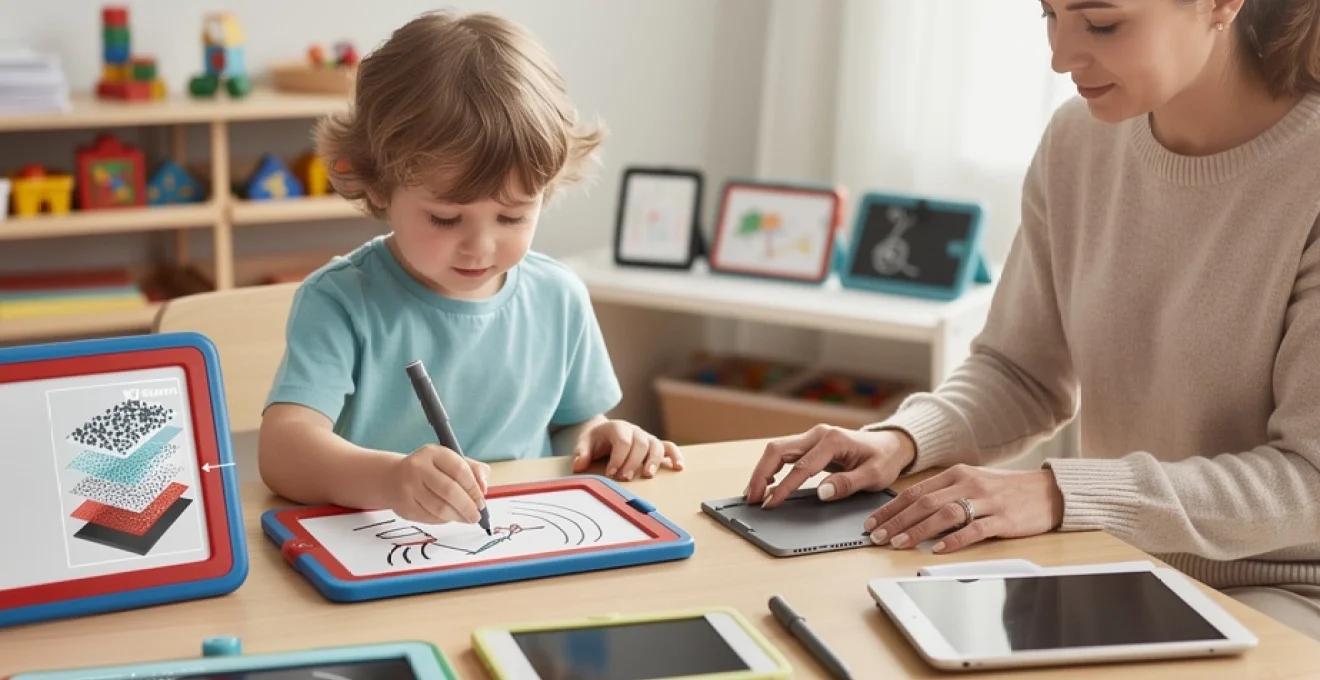
For decades, the humble magic slate has captured the imagination of children worldwide, offering an elegant solution to creative expression that requires neither paper nor paint. This deceptively simple toy represents a fascinating intersection of physics, psychology, and play, combining magnetic principles with cognitive development in ways that continue to resonate with modern families. From its mid-20th century origins to today’s LCD variations, the reusable drawing surface has proven remarkably resilient against the tide of digital entertainment, maintaining its position as a beloved educational tool and creative outlet for young minds.
The enduring popularity of these drawing devices speaks to something fundamental about human creativity and the joy of mark-making. Whether you’re introducing your toddler to their first drawing experience or seeking a mess-free alternative to traditional art supplies, the magic slate offers benefits that extend far beyond simple entertainment. Understanding the engineering brilliance and developmental advantages of these toys reveals why they’ve remained relevant across generations, even as technology has transformed virtually every other aspect of childhood play.
Mechanical engineering behind the magnetically responsive drawing surface
The term “magic slate” actually encompasses two distinct technologies, each employing different mechanical principles to achieve erasable drawing. The original design, developed in the 1920s and popularized throughout the mid-century, utilized a wax-coated cardboard backing covered by a transparent plastic sheet. When you pressed the plastic against the wax surface with a stylus, the pressure created dark lines where the two materials made contact. Lifting the sheet separated it from the wax, causing the image to seemingly disappear—though careful examination would reveal ghost images embedded in the waxy surface, creating what one toy historian described as a “superimposed work of art” accumulating over time.
Modern magnetic drawing boards, often marketed under names like Magna Doodle, represent a more sophisticated engineering approach. These devices contain millions of microscopic magnetite particles suspended in a viscous fluid sandwiched between layers of durable plastic. The magnetic stylus attracts these ferromagnetic particles to the surface, creating visible dark marks against a lighter background. This technology offers genuine erasability without the gradual degradation that plagued earlier wax-based designs, making it ideal for repeated use in educational settings.
Ferromagnetic particle suspension systems in magic slate construction
The particle suspension system in magnetic drawing boards represents a remarkable feat of materials engineering. The magnetite powder must be finely milled to a particle size typically ranging between 1 and 5 micrometres, ensuring smooth drawing characteristics whilst maintaining sufficient magnetic responsiveness. These particles are suspended in a honeycomb structure created by thousands of small cells, preventing the magnetic material from settling or clumping in one area of the board. This cellular architecture ensures consistent drawing performance across the entire surface, even after years of use.
The viscosity of the suspension medium plays a critical role in the toy’s functionality. The fluid must be thick enough to hold particles in place once attracted by the magnet, yet fluid enough to allow particles to fall away when the magnetic field is removed during erasure. Manufacturers carefully calibrate this balance, typically using a silicone-based or mineral oil medium that maintains stable viscosity across a wide temperature range. This engineering consideration ensures the toy functions equally well whether you’re using it in a warm living room or during a winter car journey.
Stylus design and magnetic field generation principles
The magnetic stylus represents the interface between user and drawing surface, and its design significantly impacts the drawing experience. Most styluses contain a small neodymium magnet, chosen for its exceptional magnetic strength relative to its size. The magnetic field strength must be carefully calibrated—too weak, and the stylus won’t attract sufficient particles to create visible lines; too strong, and it becomes difficult to achieve fine detail or may even damage the particle suspension system over time.
The stylus tip geometry influences line quality and drawing precision. Rounded tips create softer, broader lines suitable for young children still developing fine motor control, whilst sharper tips enable older children to produce detailed drawings with greater precision. Some premium magnetic drawing boards include multiple styluses with varying tip profiles, allowing users to experiment with different mark-making techniques. The magnetic field generated by these styluses typically extends approximately 2-3 millimetres from the tip, creating a “sweet spot” that determines optimal drawing distance from the surface.
Dual-layer acetate film technology and image formation
In many magnetic slate designs, the visible drawing surface consists of a dual-layer acetate or PET film that both protects the internal particle chamber and contributes to image formation. The top film must be smooth and flexible enough to respond to light pressure from the stylus or a small child’s fingertip, yet resilient enough to withstand thousands of drawing and erasing cycles without creasing. Beneath this sits a second film that helps contain the magnetite suspension and acts as a contrast layer, enhancing the visibility of the dark particles when they are pulled toward the viewer. The interaction between these layers, combined with the controlled thickness of the particle chamber, allows for crisp lines instead of fuzzy, indistinct marks.
Think of this assembly as a kind of “magnetic sandwich”: the bottom layer provides structural support, the central chamber holds the ferromagnetic fluid, and the dual-layer acetate surface mediates how we see the particles move. Manufacturers carefully select film thickness (often between 50 and 150 microns) to balance durability with responsiveness, much like choosing the right weight of paper for a sketchbook. Too thin, and the surface feels flimsy and may puncture; too thick, and younger children may struggle to make a visible mark. By optimising this layered construction, modern magic slates offer a satisfying tactile feedback that encourages children to experiment with line weight, shading, and pressure control without ever realising they are engaging with quite advanced material science.
Lever-based erasure mechanisms in brands like magna doodle and etch A sketch alternatives
While the drawing experience feels almost magical, the erasure mechanism in most magnetic slates is elegantly mechanical. Instead of “deleting” marks in a digital sense, these toys redistribute the magnetite particles away from the viewing surface. A sliding bar or lever, usually located at the bottom or side of the frame, is connected to a non-magnetic wiper element that passes behind the particle chamber. As you pull the lever, this internal wiper gently knocks the particles back into a neutral position, breaking the alignment created by the stylus and returning the surface to its original blank state.
In many Magna Doodle-style boards, the erasure bar is driven by simple linkages that convert linear motion into a sweeping action across the full width of the drawing window. This is one reason why a slow, steady pull of the lever tends to produce a more complete erase than a quick, jerky movement. Some higher-end models even use spring-assisted mechanisms to ensure consistent pressure during erasure, reducing the risk of faint “ghost lines” remaining on the screen. Compared with older wax-based magic slates—which gradually accumulated semi-permanent impressions—these lever-based systems provide a genuinely fresh drawing surface each time, supporting open-ended creative play without the frustration of residual marks.
Cognitive development milestones activated through reusable drawing systems
Beyond their clever engineering, magic slates and magnetic drawing boards have a profound impact on early cognitive development. Because they invite children to draw, erase, and try again with no penalty, these reusable drawing systems naturally encourage experimentation and problem-solving. Young users can test ideas, adjust their approach, and refine their creations in real time, building resilience and a growth mindset. For parents and educators looking for tools that support both fun and learning, a magic slate often becomes an unsung hero on the playroom shelf.
Reusable drawing toys are particularly powerful because they turn abstract concepts—like cause and effect, spatial relationships, and symbolic representation—into something a child can literally hold in their hands. When a toddler realises that moving the stylus in a circle makes a circle appear, or that pulling the lever makes all the marks vanish, they are building foundational mental models about how the world works. Over time, these toys support a range of cognitive milestones, from early scribbling and shape recognition to pre-writing skills and early numeracy practice.
Fine motor skill refinement via stylus manipulation and pressure control
One of the most immediate benefits of magic slates is their impact on fine motor skills. Grasping the stylus, positioning it correctly, and guiding it across the surface require coordination of the small muscles in the fingers, hand, and wrist. For children moving from fist grips to more mature tripod grasps, the low-friction surface of a magnetic slate provides an accessible training ground. Unlike pencil on paper, which can snag or tear when pressed too hard, the smooth acetate encourages a fluid, continuous motion that feels rewarding from the very first scribble.
Pressure control is another subtle but important skill developed through repeated play on a magic slate. When children press lightly and see a faint line, then press harder and see a bolder mark, they begin to understand how their physical actions translate into visual outcomes. Occupational therapists often use this kind of feedback to help children who struggle with handwriting, as practising on a magic slate can build the muscle memory needed for controlling pencil pressure later on. In this way, a simple magnetic drawing board can act as a bridge between early doodling and the more demanding motor requirements of classroom writing tasks.
Spatial reasoning enhancement through non-permanent mark-making
How does a child learn that shapes relate to one another in space, or that objects can be enlarged, rotated, or reversed? Non-permanent mark-making on a magic slate is a surprisingly effective way to develop these spatial reasoning skills. Because drawings can be erased instantly, children feel free to redraw a shape bigger, move it to a different part of the board, or experiment with mirror images without worrying about “ruining” a piece of paper. This freedom reduces performance anxiety and invites playful exploration of geometry long before formal lessons begin.
Repeatedly drawing simple forms—such as houses, faces, or vehicles—helps children internalise concepts like symmetry, proportion, and orientation. A child might notice that placing windows higher or lower on a house changes its appearance, or that rotating a triangle can transform a “roof” into a “boat.” These micro-experiments, carried out in seconds on a reusable slate, slowly build the mental toolkit required for later tasks in mathematics, map reading, and even coding. In many ways, the magic slate functions like an analogue sandbox environment for visual thinking, where ideas can be sketched, modified, and discarded at will.
Neural pathway development in pre-writing children using magnetic slate tools
At a neurological level, every stroke a child makes on a magic slate helps to wire the brain for more complex tasks. Research into early handwriting and drawing suggests that repetitive, purposeful movements create and strengthen neural pathways between the motor cortex, visual cortex, and areas involved in planning and attention. When a child draws a circle or traces a letter multiple times on a magnetic board, they are not just practising a shape—they are reinforcing a network of connections that will later support fluent handwriting and literacy.
Because magnetic slates allow infinite repetition without consuming paper or ink, they are particularly well suited to this kind of neural rehearsal. Parents and educators can invite pre-writing children to trace simple patterns, follow dotted lines drawn by an adult, or copy large letterforms, all within a playful, low-pressure context. Over time, you may notice improvements in a child’s ability to sustain attention, plan a sequence of movements, and correct their own errors—core executive functions that underpin academic success. In this sense, a magic slate is more than a toy; it is a compact, child-friendly tool for building the brain’s “wiring diagram” for future learning.
Comparative analysis of legacy drawing toys: boogie board versus traditional magnetic slates
As technology has advanced, the world of reusable drawing toys has expanded to include LCD writing tablets such as Boogie Board devices. At first glance, these modern gadgets might seem to make traditional magnetic slates obsolete, but the reality is more nuanced. Each system brings its own strengths, and understanding the differences can help you choose the best creative tool for your child or classroom. It also highlights why the enduring appeal of a magic slate remains strong even in an era of sleek electronic alternatives.
Boogie Board-style LCD tablets rely on pressure-sensitive liquid crystal displays that change state when pressed, creating high-contrast lines without ink or magnets. Traditional magnetic slates, by contrast, use physical particles and magnetic fields to form images. This means that while both offer “draw and erase” functionality, they feel quite different to use and have distinct sensory profiles. Many children appreciate the crisp, paper-like appearance of LCD writing tablets, whereas others are drawn to the slightly textured resistance and audible feedback of sliding a stylus across a magnetic board.
From a durability and maintenance perspective, traditional magnetic slates have a clear advantage: they require no batteries or charging, and quality models can survive years of drops and rough handling. LCD tablets, including entry-level Boogie Board products, are generally robust but still contain electronic components that can fail or degrade over time. For travel, long car journeys, or settings where access to power is limited, a classic magic slate remains a very reliable companion. However, if your priority is ultra-thin portability and the ability to save or transfer images (in more advanced models), LCD tablets do offer capabilities beyond their analogue counterparts.
Cost and accessibility are also important factors. Simple magnetic drawing boards are widely available at budget-friendly price points, often between the cost of a colouring book and a mid-range toy. Boogie Board devices and similar LCD writing tablets tend to sit at a higher price bracket, though they still represent good value when compared with tablets or smartphones. For families or educators managing tight budgets, traditional slates often provide the best balance of affordability, tactile engagement, and educational value. Many households end up using both: a rugged magnetic board for younger children and a slim LCD writing tablet for older siblings who are beginning to take notes, solve sums, or sketch more detailed designs.
Material science and manufacturing processes in modern reusable drawing tablets
Behind every magic slate or magnetic drawing board on the shelf lies a complex web of material science decisions and manufacturing processes. Toy designers must balance safety, durability, cost, and environmental impact while still producing a product that feels delightful in small hands. As parents become more conscious of what goes into the toys their children use, understanding these materials can inform more confident purchasing decisions. It can also shed light on why some seemingly similar products vary so much in performance and lifespan.
From the non-toxic magnetite powder inside the drawing chamber to the ABS or polystyrene frame that protects it, each component is engineered to withstand years of enthusiastic play. Manufacturing lines for reusable drawing tablets often combine precision injection moulding, automated filling of particle suspensions, and rigorous leak-testing to ensure that no material escapes during normal use. When everything works as intended, the result is a robust, child-safe tool that can be scribbled on thousands of times without leaking, warping, or fading.
Non-toxic magnetite powder standards in children’s drawing products
Safety regulations for children’s products have become significantly stricter over the past few decades, and magnetite-based toys are no exception. The ferromagnetic powder used in modern magic slates is almost always formulated to meet international standards such as EN 71 in Europe and ASTM F963 in the United States. These frameworks limit heavy metal content, prohibit hazardous additives, and require that any ingested material be non-toxic at typical exposure levels. In practice, this means that even if a board were to crack—a rare event in quality products—the internal material should not pose an acute poisoning risk.
To achieve compliance, manufacturers typically use high-purity magnetite or ferrite blends, sometimes coated with inert materials to improve stability and reduce dust. Production batches are tested for particle size, chemical composition, and potential contaminants, with third-party laboratories providing certification where required. When you see safety markings on packaging, they are the visible tip of a much larger iceberg of quality control. For parents, choosing a reputable brand or retailer greatly increases the likelihood that the magic slate in your child’s hands has passed these stringent checks.
Polystyrene and ABS plastic frame construction durability
The outer frame of a magic slate does far more than hold the drawing surface in place; it protects the internal mechanism from impact, twisting, and everyday knocks. Most manufacturers rely on tough thermoplastics such as high-impact polystyrene (HIPS) or acrylonitrile butadiene styrene (ABS), both of which are known for their strength and resistance to cracking. ABS, in particular, is favoured in premium boards because it combines rigidity with a slight flexibility that helps absorb shocks—much like the bumper on a car.
Using injection moulding, factories can create complex frame designs with integrated handles, stylus docks, and internal ribs that add strength without significant extra weight. These design features are not just aesthetic; they determine how well a board survives being dropped from a table, stepped on accidentally, or packed into a school bag day after day. When comparing products, you can often feel the difference: a sturdier magic slate will flex slightly under pressure rather than creak or show stress marks, indicating a more thoughtful choice of materials and wall thicknesses.
Environmental impact assessment of single-use paper alternatives
For many families and classrooms, one of the key attractions of a magic slate is its role as a reusable alternative to paper. A single magnetic drawing board can replace hundreds, if not thousands, of sheets of scrap paper used for doodling, practising letters, or playing games like tic-tac-toe. This reduction in paper consumption can be especially meaningful in busy households, where children may otherwise generate a constant stream of partially used pages. Over the lifetime of a quality board, the environmental savings in terms of paper, printing, and waste management can be significant.
However, it is important to recognise that magic slates themselves are made from plastics and other materials that carry their own environmental footprint. The most sustainable approach is therefore to choose durable products that will be used for many years and passed on between siblings or into school settings rather than treated as short-term novelties. Some manufacturers are beginning to explore recycled plastics and more easily recyclable frame designs, though industry-wide change is still emerging. As consumers, we can support this shift by favouring robust, repair-resistant designs over ultra-cheap, disposable versions that are more likely to fail after a short period of use.
Therapeutic applications in occupational therapy and special educational needs settings
Magic slates and magnetic drawing boards have quietly earned a place in many occupational therapy clinics and special educational needs (SEN) classrooms. Their combination of visual feedback, tactile engagement, and low risk makes them ideal tools for supporting children with a wide range of developmental profiles. Therapists appreciate that these toys can be adapted to suit different goals: from strengthening hand muscles and improving grip to supporting communication, emotional expression, and sensory regulation. Because the surface can be cleared instantly, each activity can be reset without fuss, helping children stay focused and motivated.
For children with fine motor delays, practising simple line patterns, shapes, or tracing exercises on a magic slate can build strength and coordination without the pressure of producing a “perfect” outcome. Those with sensory sensitivities often find the gentle resistance of the stylus soothing, and the predictable “swish” of the erasure lever can become a calming ritual. In some SEN settings, magic slates are even used as low-tech communication devices: a child may draw or write simple symbols to express choices, feelings, or needs, then erase them once acknowledged. This approach offers a sense of control and privacy that some children find deeply reassuring.
From a practical standpoint, therapists also value the hygiene and portability of reusable drawing systems. Boards can be wiped clean between sessions, carried easily between home, school, and clinic, and used in spaces where messy materials like paint or clay would be impractical. If you are a parent or educator working with a therapist, you might find that introducing a magic slate at home creates a familiar bridge to clinical exercises, reinforcing progress made in formal sessions. In this way, a simple drawing toy becomes part of a child’s wider support ecosystem.
Market evolution from Fisher-Price’s 1974 patent to contemporary LCD writing tablets
The modern story of the magic slate is closely tied to a series of innovations that began in the mid-20th century and accelerated with Fisher-Price’s influential 1974 patent for a magnetic drawing toy. This design, which helped popularise the format we now associate with Magna Doodle-style boards, standardised key features such as the magnetite-filled panel, integrated stylus, and sliding erasure bar. As the patent landscape evolved and protection periods lapsed, other manufacturers entered the market, refining materials, enhancing safety, and introducing themed designs that tied into popular characters and educational curricula.
Over the decades, we have seen a steady diversification of the magic slate category. Compact travel versions, oversized classroom boards, and products decorated with everything from space themes to seasonal motifs now sit alongside classic plain frames. At the same time, the arrival of Boogie Board devices and other LCD writing tablets has added a digital twist to reusable drawing, introducing ultra-thin profiles, one-button erasure, and, in some models, Bluetooth connectivity for saving artwork. Yet despite these high-tech options, the core appeal remains the same: a surface where children can draw freely, make mistakes, and start again in an instant.
Looking at current market trends, many retailers report that demand for non-connected, screen-light play remains strong, particularly among parents of younger children. Magic slates benefit from this shift, offering a “pre-digital” creative experience that still feels novel and engaging in a world saturated with apps and notifications. Manufacturers respond by blending nostalgia with innovation—reissuing retro designs alongside contemporary colour palettes and eco-conscious packaging. As we look ahead, it seems likely that both traditional magnetic slates and LCD writing tablets will continue to coexist, each serving slightly different needs but all tapping into the same enduring human delight: the simple joy of making a mark and watching imagination come to life.